
Benzodiazepine Withdrawal: Why It Requires Medical Supervision
Benzodiazepine withdrawal can be unpredictable and severe. Learn why medical supervision and gradual tapering are critical for safe recovery.
By Tim StoddartSep 25, 2026Addiction Treatment
In this article
- Key Highlights
- Why Benzodiazepine Withdrawal Can Be Dangerous
- Common Symptoms of Benzodiazepine Withdrawal
- Physical Symptoms
- Sensory and Psychological Symptoms
- Submit Your Listing to Our Rehab Directory
- The Role of Medical Supervision During Detox
- The Medical Tapering Process Explained
- Acute Withdrawal vs. Protracted Withdrawal (PAWS)
- When to Seek Emergency Medical Attention
- Submit Your Listing to Our Rehab Directory
- Frequently Asked Questions
- Can you safely detox from benzodiazepines at home?
- How long does benzodiazepine withdrawal last?
- What is the difference between short-acting and long-acting benzodiazepines?
- Why are seizures a risk during benzodiazepine detox?
- What medications help with benzodiazepine withdrawal?
- Conclusion
- Sources
Withdrawing from benzodiazepines without medical oversight carries serious physical and psychological risks. Unlike withdrawal from many other substances, stopping benzodiazepines abruptly can lead to severe complications, including grand mal seizures, extreme rebound anxiety, delirium, and life-threatening autonomic instability. Because of these potential dangers, medical professionals strongly advise against attempting to quit "cold turkey" or managing detox independently.
Benzodiazepines commonly prescribed for anxiety, panic disorders, insomnia, and seizures under brand names like Xanax (alprazolam), Klonopin (clonazepam), Valium (diazepam), and Ativan (lorazepam) alter central nervous system activity. Over time, the brain adjusts to the presence of the drug. When the medication is suddenly reduced or stopped, the central nervous system becomes hyperactive, triggering acute withdrawal symptoms that require careful clinical management.
Key Highlights
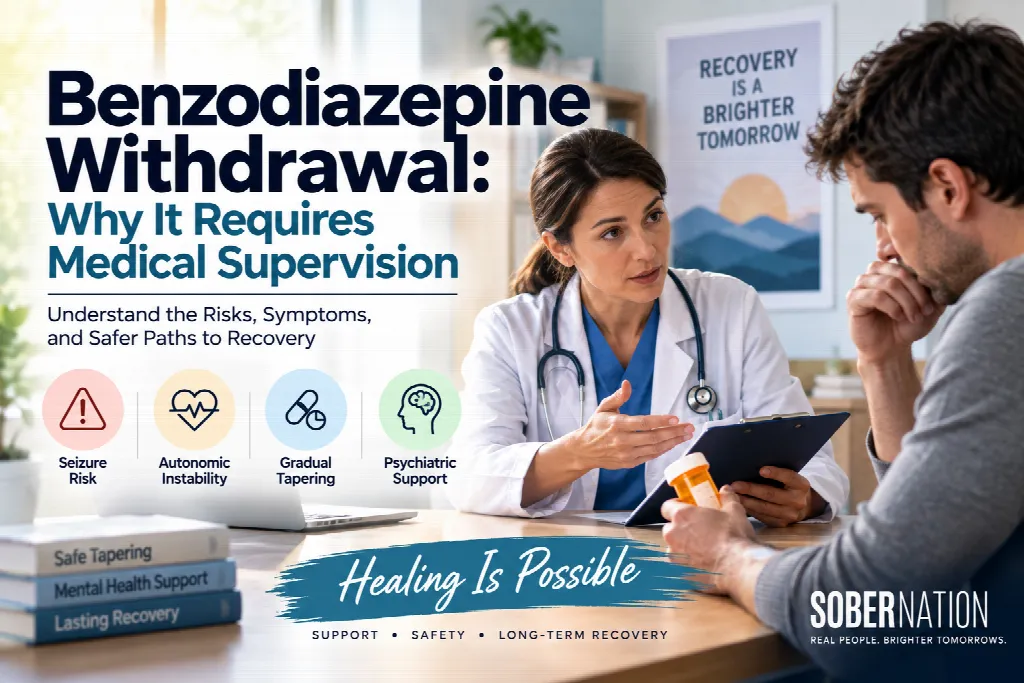
- High Risk of Seizures: Sudden discontinuation of long-term benzodiazepine use can trigger life-threatening grand mal seizures.
- Autonomic Instability: Symptoms like spikes in blood pressure, elevated heart rate, and severe tremors require continuous vital sign monitoring.
- Need for Gradual Tapering: Safe withdrawal typically involves a structured, months-long tapering protocol supervised by a healthcare provider.
- Psychiatric Support: Severe rebound anxiety, panic attacks, severe depression, and psychosis can occur during detox, necessitating professional mental health management.
Why Benzodiazepine Withdrawal Can Be Dangerous
Benzodiazepines work by enhancing the effects of gamma-aminobutyric acid (GABA), the primary inhibitory neurotransmitter in the brain. GABA acts as a natural brake on neural activity, helping to reduce anxiety, promote sleep, and relax muscles. When benzodiazepines are used regularly over weeks or months, the brain decreases its natural GABA receptor sensitivity and production to maintain balance.
According to clinical guidelines published by the Substance Abuse and Mental Health Services Administration (SAMHSA), stopping the medication abruptly leaves the central nervous system in a state of severe hyperexcitability. Without the artificial GABA enhancement, the brain experiences uncontrolled excitatory signaling. This rapid shift can manifest as autonomic hyperactivity, panic, motor agitation, and dangerous seizure activity.
Because the intensity of withdrawal depends on factors like dosage, duration of use, half-life of the specific drug, and individual physiology, the course of withdrawal is difficult to predict without clinical evaluation.
Common Symptoms of Benzodiazepine Withdrawal
Benzodiazepine withdrawal symptoms typically present in stages and can vary significantly from person to person. They are generally categorized into physical, sensory, and psychological symptoms.
Physical Symptoms
- Severe muscle cramps, stiffness, and tremors
- Nausea, vomiting, and abdominal distress
- Profuse sweating, fever, and chills
- Tachycardia (rapid heartbeat) and elevated blood pressure
- Grand mal seizures
Sensory and Psychological Symptoms
- Rebound anxiety and severe panic attacks
- Profound insomnia and vivid nightmares
- Hypersensitivity to light, sound, and touch
- Depersonalization (feeling detached from oneself)
- Delirium, hallucinations, and paranoid ideation
Submit Your Listing to Our Rehab Directory
Sober Nation is one of the nation’s leading recovery resources, dedicated to helping people struggling with substance abuse disorder find treatment options that can get them on a path to sobriety.
To get listed in our directory, please fill out the contact form below.
The Role of Medical Supervision During Detox
Medical supervision ensures that withdrawal is monitored, manageable, and safe. In a specialized medical detox environment or under strict outpatient clinical supervision, healthcare providers evaluate the individual's history, current dose, and overall physical health to create a personalized care plan.
Key components of medically supervised care include:
- Vital Sign Monitoring: Tracking heart rate, blood pressure, and body temperature to catch signs of autonomic crises early.
- Medication-Assisted Management: Utilizing long-acting benzodiazepines (such as diazepam) or non-benzodiazepine supportive medications to stabilize the brain before beginning a slow taper.
- Seizure Prevention: Administering anticonvulsant agents when clinically indicated to prevent seizure activity.
- Psychiatric Intervention: Providing immediate behavioral health support to manage distressing rebound symptoms, psychosis, or severe depression.
The Medical Tapering Process Explained
The standard medical approach to ending benzodiazepine reliance is a gradual taper. Rather than stopping the drug all at once, healthcare providers systematically reduce the dose over weeks or months. This gradual reduction allows the brain's GABA receptors time to slowly recalibrate and regain baseline function.
According to the National Institutes of Health (NIH) treatment manuals, a taper strategy often involves switching a patient from a short-acting benzodiazepine (like alprazolam or lorazepam) to an equivalent dose of a long-acting benzodiazepine (like diazepam). Long-acting formulas provide smoother, more stable blood levels, minimizing the sharp peaks and crashes that trigger severe withdrawal cravings and symptoms.
Tapering schedules are highly individual. A doctor may adjust the speed of the taper based on how the patient tolerates each dose reduction, pausing or slowing down the schedule if uncomfortable symptoms surge.
Acute Withdrawal vs. Protracted Withdrawal (PAWS)
Understanding the timeline of benzodiazepine withdrawal helps set realistic expectations for recovery. Withdrawal is generally split into two main phases:
| Phase | Typical Timeline | Primary Symptoms | Clinical Focus |
|---|---|---|---|
| Acute Withdrawal | 1 to 4 weeks (varies by drug half-life) | Seizure risk, acute panic, insomnia, tremors, elevated vitals, gastrointestinal distress | Medical stabilization, vital sign monitoring, gradual dose reduction, seizure prevention |
| Protracted Withdrawal (PAWS) | Months to over a year | Persistent anxiety, mood swings, sleep disturbances, cognitive fog, tinnitus | Psychotherapy, lifestyle adjustments, long-term mental health support, non-pharmacological coping strategies |
Post-Acute Withdrawal Syndrome (PAWS) can cause low-level, wave-like symptoms that persist long after the drug has left the system. Having ongoing professional mental health care helps individuals navigate PAWS without returning to benzodiazepine use for symptom relief.
When to Seek Emergency Medical Attention
If you or someone you know is stopping or reducing benzodiazepine intake and experiences any of the following emergency warning signs, seek immediate medical care by calling 911 or visiting an emergency room:
- Loss of consciousness or seizures
- Confusion, severe disorientation, or acute hallucinations
- Chest pain, irregular heartbeat, or severe shortness of breath
- Inability to keep liquids down, leading to severe dehydration
- Thoughts of self-harm or suicide
Submit Your Listing to Our Rehab Directory
Want to add your rehab or treatment center to the SoberNation directory? Call (866) 496-4250 to get started.
Frequently Asked Questions
Can you safely detox from benzodiazepines at home?
Detoxing at home without medical oversight is strongly discouraged due to the risk of seizures, severe rebound panic, and blood pressure spikes. Outpatient tapering can occur at home, but only when carefully designed, monitored, and adjusted by a qualified physician.
How long does benzodiazepine withdrawal last?
The acute phase typically lasts from two to four weeks depending on whether the medication was short-acting or long-acting. However, mild to moderate protracted symptoms (PAWS) like sleep issues or heightened anxiety can persist for several months.
What is the difference between short-acting and long-acting benzodiazepines?
Short-acting benzodiazepines (like Xanax) leave the body quickly, often causing rapid, intense withdrawal symptoms shortly after missing a dose. Long-acting benzodiazepines (like Valium) clear the body more slowly, providing smoother blood levels that are easier to systematically taper down.
Why are seizures a risk during benzodiazepine detox?
Benzodiazepines suppress central nervous system activity by enhancing GABA. Stopping them abruptly removes this suppression, causing neural activity to surge out of control. This hyperexcitable state can directly trigger grand mal seizures.
What medications help with benzodiazepine withdrawal?
Physicians frequently use long-acting benzodiazepines like diazepam to stabilize the central nervous system during a taper. Anticonvulsants, beta-blockers for rapid heart rate, and non-addictive sleep aids may also be prescribed depending on individual needs.
Conclusion
Benzodiazepine withdrawal is a complex, delicate medical process that requires patience, precise planning, and skilled clinical support. Attempting to stop these medications rapidly or without professional direction carries profound health risks, including life-threatening seizures and severe psychiatric instability. Working closely with medical experts ensures a gradual, safer reduction schedule designed to protect both physical health and long-term recovery.
If you or a loved one are considering stepping down from benzodiazepine use, reach out to a healthcare provider, a specialized addiction treatment center, or explore professional recovery resources to find safe, compassionate support.
Sources
- Substance Abuse and Mental Health Services Administration. Detoxification and Substance Abuse Treatment. Treatment Improvement Protocol (TIP) Series 45. SAMHSA
- National Center for Biotechnology Information. Management of Benzodiazepine Misuse and Dependence. National Library of Medicine. NCBI
- National Institute on Drug Abuse. Benzodiazepines and Opioids. Research Reports. NIDA
About the author
Tim Stoddart
Spiritual gangster. I love dogs, music and the blank page. Grateful to be sober. Join my mailing list for TimStodz and join my Facebook Page.
Ready to take the next step?
Recovery starts with finding the right treatment. Browse rehab centers, detox programs, and sober living homes in our nationwide directory.
Choose your next step
Keep reading, with a purpose
Related guide
Getting Sober: How to Start Safely and What to Do Today
If you want to get sober but do not know where to begin, start with the immediate questions: how to stop safely, who to ask for help, and what support you will need in the first few days.
Related guide
Staying Sober: A Practical Guide to Protecting Your Recovery
Once you stop drinking or using, there is still work, family, stress, and free time to figure out. Staying sober involves building routines and knowing who to call when you want to use again.
Leave a Reply
Your email address will not be published. Required fields are marked *