
Why Shame Can Make Addiction Harder to Treat
Learn how shame affects addiction, creates barriers to treatment, and how self-compassion and evidence-based care can support recovery.
By Tim StoddartNov 3, 2026Addiction Treatment

In this article
- Key Highlights
- The Fundamental Difference Between Shame and Guilt
- Submit Your Listing to Our Rehab Directory
- How Shame Drives the Addiction Cycle
- Why Shame Prevents People from Seeking Professional Help
- Comparing Punitive vs. Compassionate Recovery Approaches
- Evidence-Based Strategies to Overcome Shame in Treatment
- Cognitive Behavioral Therapy (CBT)
- Acceptance and Commitment Therapy (ACT)
- Peer Support Communities
- Family and Interpersonal Therapy
- Practical Steps for Families and Loved Ones
- Frequently Asked Questions
- Is shame always bad in recovery?
- How do I know if I am experiencing shame or guilt?
- Can family members accidentally make shame worse for a loved one?
- What is self-stigma in addiction?
- What type of therapy can help with shame?
- Submit Your Listing to Our Rehab Directory
- Conclusion
- Sources
Why Shame Can Make Addiction Harder to Treat
Shame is one of the significant psychological barriers to seeking and completing addiction treatment. Unlike guilt, which involves feeling bad about a specific behavior, shame creates a deep belief that a person is fundamentally broken or unworthy of help. Understanding why shame can make addiction harder to treat helps individuals, families, and healthcare providers build more effective pathways toward sustainable recovery.

When someone experiences intense internal shame, they often isolate themselves to avoid judgment or punishment. This isolation can reinforce substance use as a coping mechanism, creating a destructive feedback loop. Addressing shame through compassionate, evidence-informed care can support long-term healing.
Key Highlights
- Shame vs. Guilt: Guilt focuses on an action ("I made a mistake"), whereas shame attacks personal identity ("I am a bad person").
- The Shame-Use Cycle: Unprocessed shame creates emotional pain, which may lead individuals to use substances to numb that pain, generating further shame.
- Barrier to Care: Fear of judgment and self-stigma can stop people from reaching out for medical evaluation or professional addiction treatment.
- Therapeutic Solutions: Approaches such as Cognitive Behavioral Therapy (CBT), Acceptance and Commitment Therapy (ACT), and peer support can help people address shame.
- Compassion-Focused Recovery: Shifting from self-blame to self-compassion can encourage honesty, vulnerability, and continued engagement in care.
The Fundamental Difference Between Shame and Guilt
Direct Answer: Guilt is an emotion focused on a specific action or mistake, often leading to a desire to make amends. Shame is a self-evaluative emotion centered on identity, convincing someone that they are defective, unworthy, or beyond help.
Evidence: Research available through the National Institutes of Health (NIH) discusses the relationship between shame, guilt, and substance use. These emotions can affect how individuals view themselves and respond to their experiences.
Why It Matters: Differentiating between these emotions allows individuals in recovery to take responsibility for their actions without defining their entire identity by past mistakes.
Practical Takeaway: Pay attention to your internal language. When a mistake happens, try to focus on the specific behavior rather than judging your entire character.
Submit Your Listing to Our Rehab Directory
Sober Nation is one of the nation’s leading recovery resources, dedicated to helping people struggling with substance abuse disorder find treatment options that can get them on a path to sobriety.
To get listed in our directory, please fill out the contact form below.
How Shame Drives the Addiction Cycle
Substance use disorders involve changes in brain systems related to reward, stress response, and decision-making. When intense shame becomes part of someone's experience, it can add to emotional distress and make recovery more challenging.
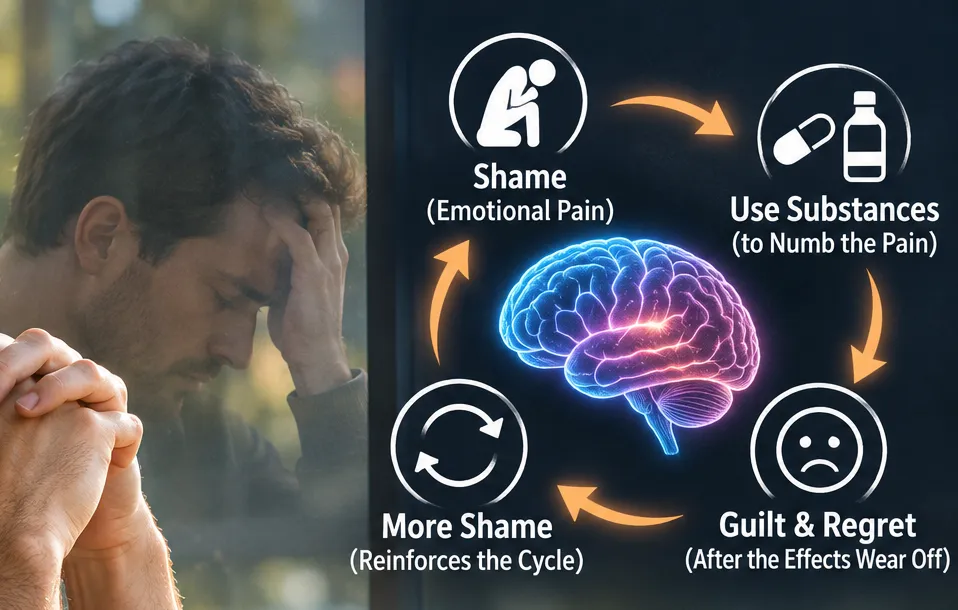
The cycle can unfold through several emotional stages:
- Emotional Pain and Shame: Painful feelings may arise from stigma, strained relationships, or personal distress.
- Desire to Numb: The burden of feeling flawed can create a desire to escape difficult emotions.
- Substance Use: A person may use substances in an attempt to temporarily relieve emotional pain.
- Post-Use Guilt and Regret: As the effects wear off, the person may face consequences or feel regret about their actions.
- Internalized Shame: Regret can turn into harsh self-judgment, reinforcing the belief that change is impossible and potentially restarting the cycle.
Why Shame Prevents People from Seeking Professional Help
Direct Answer: Shame can encourage secrecy and fear of exposure. Individuals experiencing intense self-stigma may delay seeking professional care because they fear being judged by healthcare providers, employers, friends, or family members.
Evidence: The Substance Abuse and Mental Health Services Administration (SAMHSA) provides information about stigma and its impact on people experiencing mental health and substance use conditions. Internalized stigma can make someone feel unworthy of support or treatment.
Why It Matters: Delaying care can allow substance-related problems to continue and may increase health risks, emotional distress, and personal instability. Reaching out for support can help people explore treatment before these challenges become more difficult to manage.
Practical Takeaway: Look for healthcare providers, treatment programs, and support groups that prioritize respectful, nonjudgmental, and trauma-informed care.
Comparing Punitive vs. Compassionate Recovery Approaches
Different approaches to addiction can affect how safe people feel when discussing their struggles and seeking treatment. A supportive environment can make it easier to communicate honestly and participate in recovery.
| Approach Type | Core Message | Potential Impact on the Individual | Role in Treatment |
|---|---|---|---|
| Shame-Based or Punitive | "You must feel bad about yourself to change." | May increase secrecy, anxiety, isolation, and defensiveness. | Can make open communication and treatment engagement more difficult. |
| Compassion-Focused Care | "Substance use disorder is a treatable health condition." | Encourages psychological safety, honest communication, and self-respect. | Can support trust, continued engagement, and a healthier recovery environment. |
Evidence-Based Strategies to Overcome Shame in Treatment
Addressing shame often requires psychological and social support within a safe recovery environment. Healthcare professionals and support networks may use several approaches to help individuals process difficult emotions and develop healthier ways of thinking.
Cognitive Behavioral Therapy (CBT)
CBT helps individuals recognize unhelpful thought patterns, such as all-or-nothing thinking and harsh self-criticism, that can contribute to shame. By examining automatic thoughts, people can learn to replace negative self-judgment with more realistic and balanced perspectives.
Acceptance and Commitment Therapy (ACT)
ACT encourages individuals to acknowledge difficult emotions without allowing those feelings to control their actions. By accepting uncomfortable experiences and choosing actions that align with personal values, individuals can develop healthier ways to respond to shame and emotional distress.
Peer Support Communities
Participating in mutual support groups, such as 12-Step meetings, SMART Recovery, or community recovery groups, can help reduce isolation. Hearing others share similar experiences may help individuals recognize that they are not alone in their struggles.
Family and Interpersonal Therapy
Guided family therapy can help loved ones address past conflicts, establish healthy boundaries, and reduce blame within the home. Learning about substance use disorders can also help family members respond with greater understanding while maintaining appropriate boundaries.
Practical Steps for Families and Loved Ones
Families can play an important role in creating an environment where someone feels safer asking for help. Support does not mean ignoring harmful behavior or removing accountability. It means responding in ways that encourage honesty, safety, and access to appropriate treatment.
- Listen without judgment: Give your loved one an opportunity to talk without immediately criticizing or interrupting.
- Avoid labels: Focus on the person's behavior and needs rather than defining them by their substance use.
- Encourage professional support: Help them explore qualified healthcare providers, treatment programs, or recovery services.
- Recognize progress: Acknowledge positive steps, including attending appointments, asking for help, or participating in treatment.
- Maintain healthy boundaries: Offer support while protecting your own emotional and physical well-being.
- Learn about addiction: Understanding substance use disorders can help families respond with compassion and realistic expectations.
Frequently Asked Questions
Is shame always bad in recovery?
Shame is generally unhelpful when it becomes a persistent belief that someone is worthless or incapable of change. Guilt, when focused on a specific action, may help a person recognize harm and make amends. However, ongoing shame can contribute to isolation, emotional distress, and difficulty asking for help.
How do I know if I am experiencing shame or guilt?
Guilt is usually connected to a specific behavior, such as thinking, "I made a bad choice." Shame involves a broader judgment about identity, such as thinking, "I am a bad person." If your thoughts consistently attack your overall worth, you may be experiencing shame.
Can family members accidentally make shame worse for a loved one?
Yes. Family members may unintentionally increase shame through criticism, name-calling, blame, or attempts to pressure someone into changing. Although frustration and concern are understandable, respectful communication and clear boundaries can create a more supportive environment.
What is self-stigma in addiction?
Self-stigma occurs when someone internalizes negative beliefs and stereotypes about substance use disorders and applies them to themselves. This can affect self-esteem, hope, and willingness to seek professional treatment.
What type of therapy can help with shame?
Approaches such as Cognitive Behavioral Therapy (CBT), Acceptance and Commitment Therapy (ACT), and Compassion-Focused Therapy (CFT) may help people recognize self-critical thought patterns and develop healthier ways to respond to shame. A qualified mental health professional can help determine which approach is appropriate.
Submit Your Listing to Our Rehab Directory
Want to add your rehab or treatment center to the SoberNation directory? Call (866) 207-7436 to get started.
Conclusion
Understanding why shame can make addiction harder to treat is important for anyone navigating recovery. Shame can contribute to secrecy and isolation, making it more difficult to ask for help. By encouraging compassion, accurate addiction education, and evidence-informed care, individuals can begin to move away from self-criticism and build a healthier foundation for recovery.
Recovery is not about perfection. It is about taking steps toward change in an environment where healing is possible. If you or someone you care about is struggling with substance use, reaching out to a qualified healthcare provider or recovery support professional is an important first step.
Sources
About the author
Tim Stoddart
Spiritual gangster. I love dogs, music and the blank page. Grateful to be sober. Join my mailing list for TimStodz and join my Facebook Page.
Ready to take the next step?
Recovery starts with finding the right treatment. Browse rehab centers, detox programs, and sober living homes in our nationwide directory.
Choose your next step
Keep reading, with a purpose
Related Articles

Why Addiction Is a Chronic Condition: What That Really Means

5 Things You Need To Know Before Going To Treatment

How Do I Tell My Friends and Family I’m An Alcoholic?
Fentanyl Addiction and Why It’s Different from Other Opioids
Benzodiazepine Withdrawal: Why It Requires Medical Supervision

Can Addiction Be Cured? Understanding Recovery and Remission
Leave a Reply
Your email address will not be published. Required fields are marked *