WTCSB Franklin Center
Franklin, VA
- Outpatient
- MAT
Substance use treatment · Accepts clients on opioid medication but prescribed elsewhere · Cognitive behavioral therapy
Accepts: Cash or self-payment, Medicaid, Medicare


Find a free or private addiction rehab center in Virginia. Use our search-by-city tool to find recovery near you.
223 centers found (41–60)
Centers must offer every checked Level of Care. Other categories match any checked option within each category.
Franklin, VA
Substance use treatment · Accepts clients on opioid medication but prescribed elsewhere · Cognitive behavioral therapy
Accepts: Cash or self-payment, Medicaid, Medicare
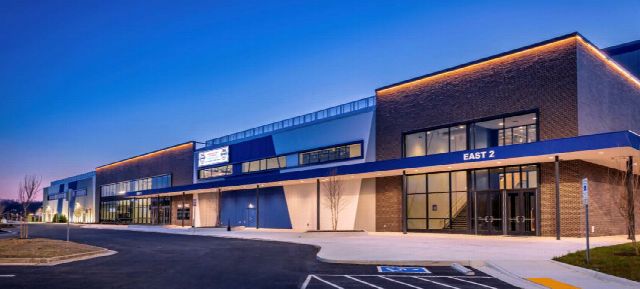
Providence Forge, VA
Substance use treatment · Accepts clients on opioid medication but prescribed elsewhere · Cognitive behavioral therapy
Accepts: Cash or self-payment, Medicaid, Medicare
Harrisonburg, VA
Substance use treatment · Does not use medication for opioid addiction · Cognitive behavioral therapy
Accepts: Cash or self-payment, Medicaid, State-financed health insurance plan other than Medicaid
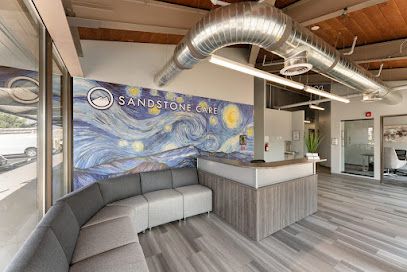
Reston, VA
Substance use treatment · Accepts clients on opioid medication but prescribed elsewhere · Cognitive behavioral therapy
Accepts: Cash or self-payment, Private health insurance, Military insurance
Virginia Beach, VA
Substance use treatment · Cognitive behavioral therapy · Substance abuse counseling
Accepts: Medicaid
Lynchburg, VA
Substance use treatment · Cognitive behavioral therapy · Dialectical behavior therapy
Accepts: Cash or self-payment, Medicaid, Medicare
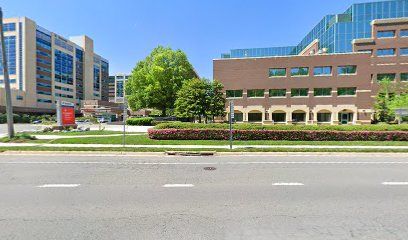
Falls Church, VA
Substance use treatment · SAMHSA-certified Opioid Treatment Program · Cognitive behavioral therapy
Accepts: Cash or self-payment, Medicaid, Medicare

Henrico, VA
Substance use treatment · Accepts clients on opioid medication but prescribed elsewhere · Cognitive behavioral therapy
Accepts: Cash or self-payment, Medicaid, State-financed health insurance plan other than Medicaid
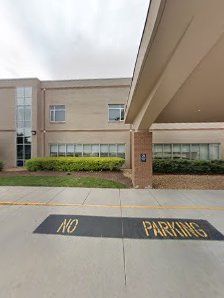
Portsmouth, VA
Substance use treatment · Accepts clients on opioid medication but prescribed elsewhere · Cognitive behavioral therapy
Accepts: Cash or self-payment, Medicaid, Medicare
Charlottesville, VA
Substance use treatment · Accepts clients on opioid medication but prescribed elsewhere · Cognitive behavioral therapy
Accepts: Cash or self-payment, Medicaid, Medicare
Virginia Beach, VA
Substance use treatment · Cognitive behavioral therapy · Dialectical behavior therapy
Accepts: Cash or self-payment, Medicaid, Medicare
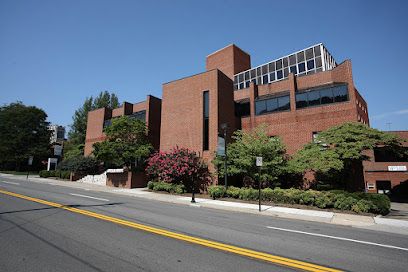
Roanoke, VA
Substance use treatment · Accepts clients on opioid medication but prescribed elsewhere · Cognitive behavioral therapy
Accepts: Cash or self-payment, Medicaid, Medicare

Newport News, VA
Substance use treatment · All Clients in Opioid Treatment Program · SAMHSA-certified Opioid Treatment Program
Accepts: Cash or self-payment, Medicaid, Medicare
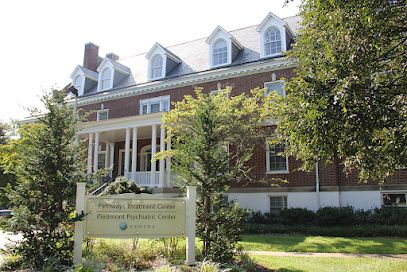
Amherst, VA
Substance use treatment · Cognitive behavioral therapy · Dialectical behavior therapy
Accepts: Cash or self-payment, Medicaid, Private health insurance
Manassas, VA
Substance use treatment · Accepts clients on opioid medication but prescribed elsewhere · Cognitive behavioral therapy
Accepts: Cash or self-payment, Medicaid, Medicare

Staunton, VA
Substance use treatment · All Clients in Opioid Treatment Program · SAMHSA-certified Opioid Treatment Program
Accepts: Cash or self-payment, Medicaid, Medicare
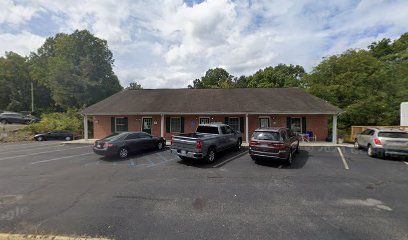
Galax, VA
Substance use treatment · Accepts clients on opioid medication but prescribed elsewhere · Cognitive behavioral therapy
Accepts: Cash or self-payment, Medicaid, Medicare
Woodbridge, VA
Substance use treatment · Accepts clients on opioid medication but prescribed elsewhere · Cognitive behavioral therapy
Accepts: Cash or self-payment, Medicaid, Medicare

Annandale, VA
Substance use treatment · Accepts clients on opioid medication but prescribed elsewhere · Cognitive behavioral therapy
Accepts: Cash or self-payment, Private health insurance
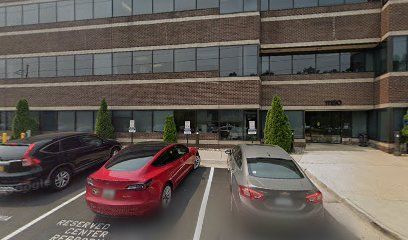
Chantilly, VA
Substance use treatment · Cognitive behavioral therapy · Dialectical behavior therapy
Accepts: Cash or self-payment, Medicaid, Medicare
To receive immediate placement help from a treatment representative, call the sponsored hotline — available 24/7.
Virginia's treatment options stretch across regions that barely resemble one another. In the coalfield counties of far Southwest Virginia — places like Galax, tucked against the Blue Ridge — a person seeking help may drive an hour or more to reach the nearest residential bed, while someone in Arlington sits inside the dense treatment network of the Washington, D.C. suburbs. Between those extremes lie the Hampton Roads coast — Virginia Beach, Newport News, Portsmouth — and the Richmond corridor, each with its own recovery community and its own waitlists. What ties the commonwealth together is a public safety net: 40 locally governed Community Services Boards act as the front door to behavioral health care for uninsured and lower-income Virginians (Virginia Department of Behavioral Health and Developmental Services). Virginia also expanded Medicaid eligibility effective January 2019, widening coverage for substance use treatment among low-income adults. For you or your loved one, where you live in the state shapes what "getting help" realistically looks like — the drive, the wait, the cost — but real options exist in every region, urban and rural alike.
Sober Nation currently lists 223 treatment centers across Virginia, and they cluster where the population does. Richmond leads with 14 listed centers, followed by Winchester with 9, then Arlington and Virginia Beach at 8 each. Roanoke lists 7; Charlottesville and Williamsburg each list 6; Portsmouth and Newport News each list 5; and Galax, anchoring the rural southwest, lists 4. That distribution mirrors Virginia's split between its populous urban crescent and its Appalachian and coastal edges, where fewer programs cover wider ground.
Statewide need is harder to capture in a single number. An estimated 16.3% of Virginians aged 12 or older had a substance use disorder in the past year — roughly 10.2% with an alcohol use disorder and 8.5% with a drug use disorder (SAMHSA, 2022–2023 National Survey on Drug Use and Health). Of those aged 12 or older classified as needing substance use treatment, about 78% did not receive it — the gap between need and care (SAMHSA, 2022–2023 NSDUH). Fatal drug overdoses, which had climbed for years, have since turned sharply downward: Virginia recorded a 43% drop in drug overdose deaths in 2024 compared with 2023, according to preliminary Virginia Department of Health data. Read together, those figures help explain why 223 listed programs still leave many Virginia communities underserved.
Most people do not need every level of care, but knowing how the levels fit together helps you start in the right place. In Virginia, outpatient care is by far the most widely available option, offered by 87% of listed centers — a fit for people with stable housing who can attend scheduled sessions while continuing to live at home, work, or care for family. Medication-assisted treatment (MAT), which pairs medications like buprenorphine or naltrexone with counseling for opioid or alcohol use, is offered by 63% of centers. Medically supervised detox — the first step when withdrawal could be dangerous — is available at 23% of centers, and residential, live-in programs at 14%, the more intensive and lower-availability end of the spectrum. Aftercare, the ongoing support that follows formal treatment, is offered by 87%, matching outpatient. If you are unsure where to begin, an assessment at any listed program, or at a Community Services Board, can point you toward the level that actually fits your situation.
Cost is often the first barrier people run into, and public insurance carries much of the load in Virginia. Among listed centers, 83% accept Medicaid and 63% accept Medicare — a sign of how central government coverage is to addiction treatment across the commonwealth. Virginia's expansion of Medicaid eligibility, effective January 2019, broadened access to these benefits for low-income adults, including coverage for substance use services, and the federal Mental Health Parity and Addiction Equity Act generally requires insurers that cover behavioral health to do so on terms comparable to physical health care. For residents who are uninsured or underinsured, Community Services Boards provide publicly funded treatment, often on an income-based sliding-fee scale. When you contact a program, ask directly what it accepts, whether it offers sliding-scale fees, and whether it can bill your specific Medicaid managed-care plan. There is no single answer here — it really goes on a case-by-case basis.
If you need a starting point that is not a particular facility, Virginia has public entry points built for exactly that. The state's SAMHSA-designated Single State Agency for substance use services is the Virginia Department of Behavioral Health and Developmental Services (DBHDS), which oversees the statewide network of local Community Services Boards. For families and individuals who want free education, peer support groups, and advocacy rather than clinical care, the state chapter NAMI Virginia is a good non-clinical resource. And if you or someone you love is in immediate crisis, the 988 Suicide & Crisis Lifeline connects you with trained counselors by phone call or text, 24 hours a day. None of these will push you toward a specific program — they exist to help you understand your options and take a first step.
Speak with a treatment representative about programs across Virginia.
Finding treatment is a personal decision. We help you compare options, explain how advertising works on our site, and give you a way to flag information that needs updating.
Facility listings show contact details so you can ask a center about its services, availability and costs.
Our listing standardsFeatured listings and the sponsored helpline are advertising. A paid placement is not a clinical recommendation.
About advertisingPrograms and availability can change. Confirm licensing, services and insurance coverage directly with a facility before choosing care.
How listings workSee an outdated phone number or a closed facility? Let us know. Facility representatives can also request access to update their listing.
Report a correction