Brattleboro Retreat Starting Now
Brattleboro, VT
- IOP
- MAT
Substance use treatment · Accepts clients on opioid medication but prescribed elsewhere · Cognitive behavioral therapy
Accepts: Cash or self-payment, Medicaid, Medicare


Find a free or private addiction rehab center in Vermont. Use our search-by-city tool to find recovery near you.
44 centers found (21–40)
Centers must offer every checked Level of Care. Other categories match any checked option within each category.
Brattleboro, VT
Substance use treatment · Accepts clients on opioid medication but prescribed elsewhere · Cognitive behavioral therapy
Accepts: Cash or self-payment, Medicaid, Medicare

Wilder, VT
Substance use treatment · Cognitive behavioral therapy · Substance abuse counseling
Accepts: Cash or self-payment, Medicaid, State-financed health insurance plan other than Medicaid
Middlebury, VT
Substance use treatment · Accepts clients on opioid medication but prescribed elsewhere · Cognitive behavioral therapy
Accepts: Cash or self-payment, Medicaid, Medicare
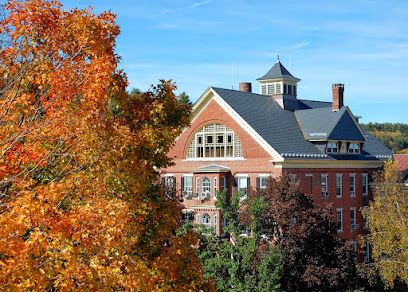
Brattleboro, VT
Substance use treatment · Accepts clients on opioid medication but prescribed elsewhere · Cognitive behavioral therapy
Accepts: Cash or self-payment, Medicaid, Medicare
Brattleboro, VT
Substance use treatment · Accepts clients on opioid medication but prescribed elsewhere · Cognitive behavioral therapy
Accepts: Cash or self-payment, Medicaid, Medicare
Brattleboro, VT
Substance use treatment · All Clients in Opioid Treatment Program · SAMHSA-certified Opioid Treatment Program
Accepts: Cash or self-payment, Medicaid, Medicare
Bennington, VT
Substance use treatment · Accepts clients on opioid medication but prescribed elsewhere · Cognitive behavioral therapy
Accepts: Cash or self-payment, Medicaid, Medicare
Burlington, VT
Substance use treatment · Cognitive behavioral therapy · Substance abuse counseling
Accepts: Military insurance

Rutland, VT
Substance use treatment · Accepts clients on opioid medication but prescribed elsewhere · Cognitive behavioral therapy
Accepts: Cash or self-payment, Medicaid, State-financed health insurance plan other than Medicaid
Saint Albans, VT
Substance use treatment · Accepts clients on opioid medication but prescribed elsewhere · Cognitive behavioral therapy
Accepts: Cash or self-payment, Medicaid, State-financed health insurance plan other than Medicaid
Rutland, VT
Substance use treatment · Accepts clients on opioid medication but prescribed elsewhere · Cognitive behavioral therapy
Accepts: Cash or self-payment, Medicaid, State-financed health insurance plan other than Medicaid

Burlington, VT
Substance use treatment · Accepts clients on opioid medication but prescribed elsewhere · Cognitive behavioral therapy
Accepts: Cash or self-payment, Medicaid, State-financed health insurance plan other than Medicaid
Barre, VT
Substance use treatment · Accepts clients on opioid medication but prescribed elsewhere · Cognitive behavioral therapy
Accepts: Cash or self-payment, Medicaid, State-financed health insurance plan other than Medicaid
Townshend, VT
Substance use treatment · Cognitive behavioral therapy · Substance abuse counseling
Accepts: Cash or self-payment, Medicaid, Medicare
Manchester Center, VT
Substance use treatment · Does not treat opioid addiction · Cognitive behavioral therapy
Accepts: Cash or self-payment, Medicaid, Medicare
Hartford, VT
Substance use treatment · Accepts clients on opioid medication but prescribed elsewhere · Cognitive behavioral therapy
Accepts: Cash or self-payment, Medicaid, Medicare
Burlington, VT
Accepts clients on opioid medication but prescribed elsewhere · Substance abuse counseling · Trauma-related counseling
Accepts: Cash or self-payment, Medicaid, State-financed health insurance plan other than Medicaid
Springfield, VT
Substance use treatment · Accepts clients on opioid medication but prescribed elsewhere · Cognitive behavioral therapy
Accepts: Cash or self-payment, Medicaid, Medicare

Brattleboro, VT
Substance use treatment · Accepts clients on opioid medication but prescribed elsewhere · Cognitive behavioral therapy
Accepts: Cash or self-payment, Medicaid, Medicare
Winooski, VT
Substance use treatment · All Clients in Opioid Treatment Program · Substance abuse counseling
Accepts: Cash or self-payment
Looking for medication treatment for opioid addiction? See methadone clinics in Vermont.
To receive immediate placement help from a treatment representative, call the sponsored hotline — available 24/7.
Vermont built one of the country's most distinctive responses to the opioid crisis: the Hub and Spoke model, a statewide system that links regional "hub" opioid treatment programs with community-based "spoke" prescribers, so someone who starts medication for addiction isn't left without follow-up care once they leave a clinic. That design reflects Vermont's central challenge. It is one of the most rural states in the country, and for many residents the nearest facility is a long drive across mountain roads rather than a short trip across town. Care here has to reach small towns, and it was deliberately engineered to do so. Vermont also shares borders with New Hampshire, Massachusetts, and New York, so for people living near the state line, the closest appropriate program sometimes sits in a neighboring state. Public insurance carries much of the cost of treatment locally, which shapes what programs are realistically within reach. If you or your loved one is weighing options in Vermont, it helps to know that the system connecting detox, medication, counseling, and ongoing support was built around the state's geography, not in spite of it.
Sober Nation lists 47 treatment centers across Vermont, and where they sit tells you something about how care is delivered in a rural state. Brattleboro leads with 9 listed centers, followed by Burlington with 6. South Burlington, Saint Albans, and Rutland each list 3. Bellows Falls, Saint Johnsbury, Montpelier, and Bradford each list 2, and Barre lists 1. Rather than clustering in a single large metro the way treatment does in more urban states, Vermont's centers are spread along its population corridors and river valleys, which keeps at least some options within reach of most regions.
For the broader picture, the federal National Survey on Drug Use and Health estimated that in 2022–2023 about 20.6% of Vermonters aged 12 or older — roughly one in five — met criteria for a past-year substance use disorder, and among those the survey classified as needing substance use treatment, about three in four (roughly 74.9%) did not receive it. Overdose deaths, by contrast, have recently fallen: 183 Vermonters died of an opioid-related overdose in 2024, down about 22% from 236 in 2023 and the second straight annual decline, with fentanyl involved in 93% of those deaths, according to the Vermont Department of Health. Both kinds of figures move year to year, so if you're comparing the scale of the problem or the treatment gap, look at the most recent state data rather than older headline numbers.
Choosing where to start often comes down to how much structure you need and what your home life allows. Among Vermont's listed centers, outpatient care is the most common level at 83%, meaning most people here can attend counseling and group sessions while living at home and keeping work, school, or caregiving commitments. Aftercare is nearly universal at 87% — the ongoing support, alumni groups, and relapse-prevention planning that help hold recovery together after formal treatment ends.
Medication-assisted treatment, which pairs medications such as buprenorphine or methadone with counseling for opioid or alcohol use disorder, is offered by 62%, a notably high share that reflects Vermont's Hub and Spoke design. Detox — the medically supervised process of clearing substances safely — is available at 19%, and residential care, where you live on-site for round-the-clock structured treatment, at 15%. Detox and residential are the more intensive entry points, while outpatient and medication-assisted treatment tend to suit people with a stable, supportive home environment.
Cost is often the first barrier people name, and in Vermont public insurance covers a lot of ground. In our directory, 89% of listed centers accept Medicaid and 53% accept Medicare, so for many residents a state or federal program is a realistic way to pay for treatment. That high Medicaid figure matters in part because Vermont adopted the Affordable Care Act's Medicaid expansion in 2014, extending eligibility to adults with incomes up to 138% of the federal poverty level, which widened the pool of adults who can use it to cover substance use care. The federal Mental Health Parity and Addiction Equity Act also requires many health plans that cover mental health and substance use benefits to do so on terms comparable to other medical care.
If you carry private insurance, call the number on your card and ask specifically about in-network detox, medication-assisted treatment, and residential coverage, and what prior authorization requires. If you're uninsured or underinsured, the state's Single State Agency (listed below) can point you toward publicly funded programs and sliding-scale options. Do your research and ask questions — you are your own best advocate about what a program will actually cost.
Compare payment options, including sliding-scale fees and Medicaid: low-cost rehab centers in Vermont.
A few Vermont-specific starting points can help you find treatment and support:
If you're not sure where to begin, the Division of Substance Use Programs can connect you with a nearby hub or spoke provider and help you understand what public funding you may qualify for.
Speak with a treatment representative about programs across Vermont.
Finding treatment is a personal decision. We help you compare options, explain how advertising works on our site, and give you a way to flag information that needs updating.
Facility listings show contact details so you can ask a center about its services, availability and costs.
Our listing standardsFeatured listings and the sponsored helpline are advertising. A paid placement is not a clinical recommendation.
About advertisingPrograms and availability can change. Confirm licensing, services and insurance coverage directly with a facility before choosing care.
How listings workSee an outdated phone number or a closed facility? Let us know. Facility representatives can also request access to update their listing.
Report a correction