Ann Arbor Comprehensive Trt Center
Ann Arbor, MI
- Outpatient
- MAT
Substance use treatment · Accepts clients on opioid medication but prescribed elsewhere · SAMHSA-certified Opioid Treatment Program
Accepts: Cash or self-payment, Medicaid, Medicare


Find a free or private addiction rehab center in Michigan. Use our search-by-city tool to find recovery near you.
418 centers found (221–240)
Centers must offer every checked Level of Care. Other categories match any checked option within each category.
Ann Arbor, MI
Substance use treatment · Accepts clients on opioid medication but prescribed elsewhere · SAMHSA-certified Opioid Treatment Program
Accepts: Cash or self-payment, Medicaid, Medicare
Clinton Township, MI
Substance use treatment · Accepts clients on opioid medication but prescribed elsewhere · Cognitive behavioral therapy
Accepts: Cash or self-payment, Medicaid, Medicare
Utica, MI
Substance use treatment · Accepts clients on opioid medication but prescribed elsewhere · Cognitive behavioral therapy
Accepts: Cash or self-payment, Medicaid, Medicare
Novi, MI
Substance use treatment · Accepts clients on opioid medication but prescribed elsewhere · Cognitive behavioral therapy
Accepts: Cash or self-payment, Medicaid, Medicare
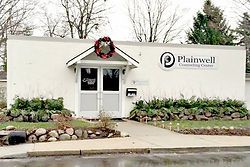
Plainwell, MI
Substance use treatment · Does not treat opioid addiction · Cognitive behavioral therapy
Accepts: Cash or self-payment, Medicaid, Medicare
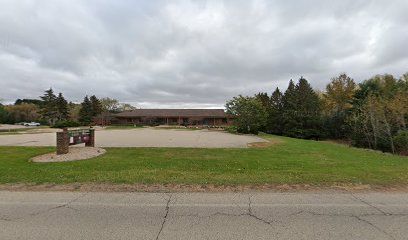
Iron Mountain, MI
Substance use treatment · Accepts clients on opioid medication but prescribed elsewhere · Cognitive behavioral therapy
Accepts: Cash or self-payment, Medicaid, State-financed health insurance plan other than Medicaid

Detroit, MI
Substance use treatment · Does not treat opioid addiction · Cognitive behavioral therapy
Accepts: Cash or self-payment, Medicaid, Medicare
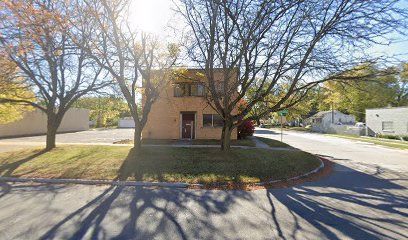
Redford, MI
Substance use treatment · Accepts clients on opioid medication but prescribed elsewhere · Cognitive behavioral therapy
Accepts: Cash or self-payment, Medicaid, State-financed health insurance plan other than Medicaid
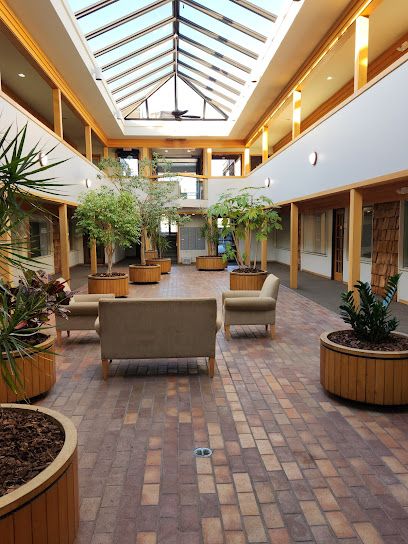
Ann Arbor, MI
Substance use treatment · Accepts clients on opioid medication but prescribed elsewhere · Cognitive behavioral therapy
Accepts: Cash or self-payment, Active duty military
Lapeer, MI
Substance use treatment · Accepts clients on opioid medication but prescribed elsewhere · Cognitive behavioral therapy
Accepts: Cash or self-payment, Medicaid, Medicare
Rochester Hills, MI
Substance use treatment · Accepts clients on opioid medication but prescribed elsewhere · Cognitive behavioral therapy
Accepts: Cash or self-payment, Medicaid, Medicare
Royal Oak, MI
Substance use treatment · Accepts clients on opioid medication but prescribed elsewhere · Cognitive behavioral therapy
Accepts: Cash or self-payment, Medicaid, Medicare

Southfield, MI
Substance use treatment · Accepts clients on opioid medication but prescribed elsewhere · Cognitive behavioral therapy
Accepts: Cash or self-payment, Medicaid, Medicare
Ypsilanti, MI
Substance use treatment · Cognitive behavioral therapy · Dialectical behavior therapy
Accepts: Cash or self-payment, Medicaid, Payment assistance
Ann Arbor, MI
Substance use treatment · Cognitive behavioral therapy · Dialectical behavior therapy
Accepts: Cash or self-payment, Medicaid, Payment assistance
Cheboygan, MI
Substance use treatment · Accepts clients on opioid medication but prescribed elsewhere · Cognitive behavioral therapy
Accepts: Cash or self-payment, Medicaid, Medicare
Kalamazoo, MI
Substance use treatment · Does not treat opioid addiction · Cognitive behavioral therapy
Accepts: Cash or self-payment, Medicaid, State-financed health insurance plan other than Medicaid

Royal Oak, MI
Substance use treatment · Accepts clients on opioid medication but prescribed elsewhere · Cognitive behavioral therapy
Accepts: Cash or self-payment, Medicaid, Medicare
Walled Lake, MI
Substance use treatment · Accepts clients on opioid medication but prescribed elsewhere · Cognitive behavioral therapy
Accepts: Cash or self-payment, Medicaid, Medicare
Novi, MI
Substance use treatment · Does not treat opioid addiction · Cognitive behavioral therapy
Accepts: Cash or self-payment, Medicaid, Medicare
Looking for medication treatment for opioid addiction? See methadone clinics in Michigan.
To receive immediate placement help from a treatment representative, call the sponsored hotline — available 24/7.
Michigan's access to treatment is shaped by a geography few states share: a two-peninsula split where the rural Upper Peninsula can put a hundred miles or more between a resident and the nearest residential bed, while more than half of the state's listed programs cluster in metro Detroit and the corridor running west toward Grand Rapids. The state broadened Medicaid coverage on April 1, 2014 through the Healthy Michigan Plan, extending behavioral health and substance use disorder benefits to a population still absorbing the long aftershocks of automotive-industry decline in cities like Flint, Saginaw, and Detroit.
Michigan was heavily exposed to the prescription-opioid wave that seeded the overdose crisis, with opioid dispensing rates that ran above the national average through much of the 2010s (CDC), and its response — syringe-service programs, widespread naloxone distribution, and a public system that routes most publicly funded care through regional entities — has built a recovery infrastructure that behaves differently from a straightforward private-pay market. If you are searching from here, the practical question is often less about what exists than about what is actually reachable from where you live.
Sober Nation lists 439 treatment centers across Michigan, and where they sit tells you nearly as much as how many there are. Detroit anchors the state with 41 listed centers, followed by Grand Rapids with 26 and Flint with 15. Lansing (14), Ann Arbor (12), Saginaw (11), and Kalamazoo (10) form the next tier, with Muskegon (8), Southfield (8), and Battle Creek (7) rounding out the ten most-listed cities. That pattern follows the Lower Peninsula's population centers closely and leaves wide rural stretches — north of the tri-cities and across nearly all of the Upper Peninsula — with markedly thinner coverage.
Statewide need is harder to size from a directory alone. An estimated 18% of Michigan residents aged 12 or older met the criteria for a substance use disorder in the past year (SAMHSA NSDUH, 2022–2023), and roughly 75% of those classified as needing substance use treatment did not receive it — a wide gap between need and care (SAMHSA NSDUH, 2022–2023). Overdose mortality, long driven by opioids and increasingly by illicitly manufactured synthetic opioids such as fentanyl, has recently turned downward: Michigan recorded 2,826 overdose deaths in 2023, down 5.7% from 2,998 in 2022, with the death rate falling from a 2021 peak of 31.1 per 100,000 to 28.2 (MDHHS).
The centers Sober Nation lists in Michigan skew heavily toward the outpatient and continuing-care end of the spectrum. Outpatient services appear at 90% of listed programs and aftercare at 91%, meaning most facilities are built to support people who keep living at home while attending counseling, group therapy, or medication visits — often the right starting point for a mild-to-moderate disorder or a step-down after more intensive care. Medication-assisted treatment (MAT), offered by 50% of listed centers, pairs FDA-approved medications such as buprenorphine or naltrexone with counseling and is a standard of care for opioid and alcohol use disorders.
Higher-intensity options are scarcer: residential, live-in treatment appears at 20% of listed centers and medically supervised detox at just 18%. When withdrawal is likely to be dangerous — as it can be with alcohol, benzodiazepines, or opioids — detox is usually where care must begin, so its narrower availability is worth planning around early rather than late.
Coverage among Michigan's listed centers leans public. Medicaid is accepted at 79% of listed programs and Medicare at 65% — significant in a state that broadened Medicaid eligibility through the Healthy Michigan Plan. For many low-income adults, that expansion is the difference between an accessible bed and an out-of-reach one. Michigan channels most publicly funded substance use treatment through regional managed-care entities known as Prepaid Inpatient Health Plans (PIHPs), so covered services and in-network providers can vary from one part of the state to another.
Federal parity law — the Mental Health Parity and Addiction Equity Act — generally requires health plans that cover addiction and mental health treatment to do so on terms no more restrictive than those applied to other medical care (CMS), though the details still differ by plan. If you are paying privately or are underinsured, ask each facility directly about sliding-scale fees, payment plans, and state-funded treatment slots. Do your research and ask questions — you are your own best advocate.
Compare payment options, including sliding-scale fees and Medicaid: free and low-cost rehab centers in Michigan.
Michigan's designated Single State Agency for substance use services is the Michigan Department of Health and Human Services (MDHHS), whose behavioral health programs oversee prevention, treatment funding, and the regional Prepaid Inpatient Health Plans that manage publicly funded care. For families, NAMI Michigan — the state organization of the National Alliance on Mental Illness — offers support groups, education, and guidance in finding services for co-occurring mental health and substance use conditions.
If you or someone you love is in immediate crisis, the 988 Suicide and Crisis Lifeline connects you with trained counselors by call or text, 24 hours a day. Many residents can also reach treatment, funded beds, and transportation help through their regional community mental health services program, which serves as a local entry point to the public system.
Speak with a treatment representative about programs across Michigan.
Finding treatment is a personal decision. We help you compare options, explain how advertising works on our site, and give you a way to flag information that needs updating.
Facility listings show contact details so you can ask a center about its services, availability and costs.
Our listing standardsFeatured listings and the sponsored helpline are advertising. A paid placement is not a clinical recommendation.
About advertisingPrograms and availability can change. Confirm licensing, services and insurance coverage directly with a facility before choosing care.
How listings workSee an outdated phone number or a closed facility? Let us know. Facility representatives can also request access to update their listing.
Report a correction