

 1 / 3
1 / 3At a Glance
Location
1029 East Baltimore Street, Baltimore, MD 21202
Phone
410-675-7500Primary Focus
Treatment Settings
Treatment Approaches
Special Programs
About Helping Up Mission
Helping Up Mission is a CARF-accredited recovery community in Baltimore, MD, offering residential treatment, outpatient programming, and intensive outpatient services to men, women, and young adults facing addiction, trauma, and homelessness. Rooted in a faith-based philosophy, the Mission serves as a community of hope in Greater Baltimore — rebuilding lives through structured care, safe shelter, and ongoing support.
Helping Up Mission stands apart in Baltimore's addiction treatment landscape as a faith-based recovery community that addresses the full picture of what many people in recovery are dealing with — not just substance abuse, but also homelessness, poverty, and trauma. Located at 1029 East Baltimore Street in Baltimore City, the Mission has spent 140 years serving men, women, and children in Greater Baltimore, making it one of the region's most enduring substance use treatment organizations. Its CARF accreditation reflects an institutional commitment to accountability and quality of care that recovery-minded individuals and their families can count on.
The center offers three distinct levels of care: residential treatment, an outpatient program, and an intensive outpatient program (IOP). This continuum means people can step into the level of support that fits their current needs and transition through care as their recovery progresses. Residential treatment provides an immersive environment with safe shelter and nutritious meals built in, while the outpatient and intensive outpatient options allow participants to work toward recovery while maintaining connections to their broader lives and community.
Cognitive Behavioral Therapy (CBT) forms a core part of the therapeutic approach at Helping Up Mission, giving participants structured tools to examine and reshape the thought patterns that drive destructive behavior. The Mission's model integrates counseling with practical supports — including safe shelter, hot and nutritious meals, and mobile street outreach — recognizing that stable recovery requires addressing the social and material conditions that surround addiction. Financial assistance is available, lowering the barrier to entry for people who may not have insurance or significant resources.
Helping Up Mission serves men, women, young adults ages 18 to 25, and children across Greater Baltimore, with particular experience supporting people navigating the intersection of addiction, trauma and PTSD, homelessness, and poverty. For families seeking a long-term recovery partner — not just a short-term crisis intervention — the Mission's deep roots in the Baltimore community, broad continuum of care, and faith-grounded philosophy offer a foundation that extends well beyond the first days of sobriety.
A Recovery Community Rooted in Baltimore for 140 Years
Helping Up Mission has served Greater Baltimore for 140 years, making it one of the most established addiction treatment and recovery organizations in the region. Based at 1029 East Baltimore Street, the Mission functions as more than a treatment facility — it describes itself as a community of hope, a framing that reflects its long-standing commitment to rebuilding lives rather than simply processing admissions.
The Mission's CARF accreditation signals that its programs meet rigorous national standards, a meaningful benchmark for individuals and families evaluating long-term recovery partners. For anyone who has watched a loved one cycle through short-term interventions without lasting results, the Mission's comprehensive, community-embedded model offers a different kind of foundation for sustained sobriety.
Levels of Care: Residential Treatment, IOP, and Outpatient Programs
Helping Up Mission offers a full continuum of substance abuse treatment through three levels of care: residential treatment, an intensive outpatient program (IOP), and a standard outpatient program. Residential treatment immerses participants in a structured recovery environment that includes safe shelter and hot, nutritious meals — removing the day-to-day instability that can derail early recovery. This level of care is particularly meaningful for people who are also navigating housing insecurity or homelessness, conditions the Mission is specifically equipped to address alongside addiction.
The IOP and outpatient program options allow participants to pursue recovery while maintaining some presence in their outside lives. Both formats incorporate CBT-based counseling and are served by the same faith-grounded community that anchors the Mission's residential program. This tiered structure means a person can begin their recovery journey in residential care and transition to outpatient support as they build stability — a continuity that matters enormously for long-term outcomes.
Serving Men, Women, and Young Adults Facing Addiction and Homelessness
The Mission serves men, women, young adults ages 18 to 25, and children across Greater Baltimore, with programming designed for people whose lives have been shaped by addiction, trauma and PTSD, poverty, and homelessness. That combination of conditions is not incidental — it reflects the real circumstances of many people seeking residential or outpatient addiction treatment in Baltimore, and the Mission has built its model around meeting people exactly where they are.
Mobile street outreach extends the Mission's reach into the community before people ever walk through the door, connecting individuals to services at the point of need rather than waiting for them to seek help on their own. Financial assistance is also available, ensuring that economic hardship does not stand between someone and access to residential treatment or outpatient care. Together, these features make Helping Up Mission a recovery community that is built for real-world barriers, not just ideal circumstances.
Faith-Based Recovery and the Role of Community in Long-Term Sobriety
Helping Up Mission describes itself explicitly as a faith-based organization — a distinctive characteristic that shapes its entire approach to addiction treatment and recovery. For people whose recovery is strengthened by spiritual grounding, or who are looking for a recovery community with a clear sense of purpose and shared values, this orientation is a meaningful differentiator from more clinically neutral programs.
The faith-based model at the Mission is paired with CARF-accredited programming, CBT-grounded counseling, and concrete support services like shelter and meals — a combination that reflects the Mission's view that lasting sobriety depends on renewing the mind while also stabilizing the material conditions of a person's life. Families supporting a loved one through recovery can reach the Mission at (410) 675-7500, and the facility operates seven days a week from 7:00 AM to 7:00 PM.
Why Choose Helping Up Mission
- 140-year history serving Baltimore's most vulnerable — one of the region's longest-standing recovery communities
- Addresses addiction alongside homelessness, poverty, and trauma under one roof, with safe shelter and meals included
- CARF-accredited continuum spanning residential treatment, outpatient, and intensive outpatient programs
- Mobile street outreach extends the recovery community beyond the facility walls into Greater Baltimore neighborhoods
- Financial assistance available, making sustained recovery accessible to people regardless of economic circumstances
Frequently Asked Questions
What levels of care does Helping Up Mission offer for addiction treatment?
Helping Up Mission provides three levels of care: residential treatment, an intensive outpatient program (IOP), and an outpatient program. This continuum allows individuals to enter care at the level that matches their current needs and transition to less intensive support as their recovery progresses. The residential program includes safe shelter and meals, making it especially suited for people dealing with housing instability alongside addiction.
Is Helping Up Mission accredited?
Yes. Helping Up Mission holds CARF accreditation, a nationally recognized standard for rehabilitation and addiction treatment programs. CARF accreditation signals that the facility has met rigorous quality benchmarks, which can be an important factor for individuals and families evaluating long-term recovery partners in Baltimore.
Does Helping Up Mission offer financial assistance for treatment?
Yes, financial assistance is available at Helping Up Mission. This is an important feature for people who may not have insurance coverage or significant financial resources, as it lowers the barrier to accessing residential treatment, IOP, or outpatient care. For specifics, contact the Mission directly at (410) 675-7500.
Who does Helping Up Mission serve?
Helping Up Mission serves men, women, young adults ages 18 to 25, and children in Greater Baltimore. The Mission has particular experience working with people navigating addiction alongside homelessness, poverty, and trauma or PTSD — populations that often face significant barriers to accessing traditional substance abuse treatment.
What therapeutic approach does Helping Up Mission use?
Helping Up Mission incorporates Cognitive Behavioral Therapy (CBT) as part of its counseling approach, alongside its broader faith-based model. CBT helps participants identify and change the thinking patterns that contribute to substance use. Programming is delivered within a community-oriented environment that also includes practical supports like safe shelter, meals, and mobile street outreach.
Does Helping Up Mission provide services for people experiencing homelessness?
Yes. Addressing homelessness is a core part of the Mission's model, not an add-on. The residential treatment program includes safe shelter, and the Mission explicitly serves people dealing with homelessness and poverty alongside addiction. Mobile street outreach is also available to connect individuals in the community to services before they enter formal treatment.
What conditions does Helping Up Mission treat?
Helping Up Mission provides substance abuse treatment and also addresses trauma and PTSD, recognizing that these conditions frequently co-occur with addiction. The program is designed for people whose recovery needs are shaped by the intersection of substance use, mental health challenges, housing instability, and poverty.
What are Helping Up Mission's hours of operation?
Helping Up Mission is open seven days a week, Monday through Sunday, from 7:00 AM to 7:00 PM. You can reach the facility by phone at (410) 675-7500 or visit them at 1029 East Baltimore Street, Baltimore, MD 21202.
Is Helping Up Mission a faith-based recovery program?
Yes. Helping Up Mission is a faith-based organization and describes its work as rebuilding lives and renewing minds within a community of hope. Its faith orientation shapes the culture of its programming while operating alongside CARF-accredited treatment services and CBT-based counseling. For individuals whose recovery is supported by spiritual community, this can be a meaningful aspect of the Mission's approach.
Where is Helping Up Mission located and what area does it serve?
Helping Up Mission is located at 1029 East Baltimore Street in Baltimore, MD 21202, and serves Greater Baltimore. The Mission also extends its reach through mobile street outreach, connecting people across the community to addiction treatment and recovery services.
Nearby Treatment Centers
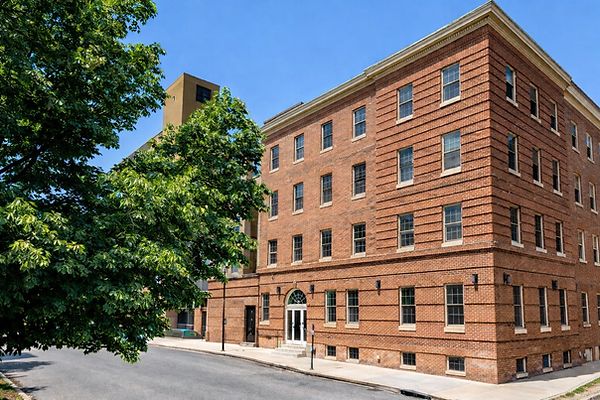
Maryland Center for Veterans Education and Training
Baltimore, MD
- IOP
- Sober Living
Substance use treatment · Accepts clients on opioid medication but prescribed elsewhere · Cognitive behavioral therapy
Accepts: Cash or self-payment, Medicaid, Medicare
Reflective Treatment Center
Baltimore, MD
- Detox
- Outpatient
- MAT
Substance use treatment · All Clients in Opioid Treatment Program · SAMHSA-certified Opioid Treatment Program
Accepts: Cash or self-payment, Medicaid, Medicare

Bridge House Inc
Baltimore, MD
- Residential
- Sober Living
Substance use treatment · Accepts clients on opioid medication but prescribed elsewhere · Cognitive behavioral therapy
Accepts: Medicaid, Sliding fee scale, Payment assistance

Valley Bridge House Inc
Baltimore, MD
- Residential
- Sober Living
Substance use treatment · Accepts clients on opioid medication but prescribed elsewhere · Cognitive behavioral therapy
Accepts: Medicaid, Sliding fee scale, Payment assistance
Healthcare for the Homeless Inc
Baltimore, MD
- IOP
- MAT
Substance use treatment · Cognitive behavioral therapy · Dialectical behavior therapy
Accepts: Medicaid, Medicare, Private health insurance
New Vision House of Hope Inc
Baltimore, MD
- IOP
- MAT
- Sober Living
Substance use treatment · Accepts clients on opioid medication but prescribed elsewhere · Cognitive behavioral therapy
Accepts: Cash or self-payment, Medicaid, Medicare