
How Tolerance Develops and Why It Matters
Discover how tolerance develops in the brain and body, why it increases overdose risk, and how understanding it supports long-term recovery.
By Tim StoddartOct 26, 2026Addiction Treatment
In this article
- Key Highlights
- The Biology: How Tolerance Develops in the Brain and Body
- Submit Your Listing to Our Rehab Directory
- Primary Mechanisms of Tolerance
- Why Understanding Tolerance Matters for Health and Safety
- Distinguishing Tolerance, Dependence, and Addiction
- Addressing High Tolerance in Recovery and Treatment
- Submit Your Listing to Our Rehab Directory
- Frequently Asked Questions
- Does high tolerance mean someone has an addiction?
- How quickly does tolerance go away after stopping substance use?
- Can you reset your tolerance without medical help?
- Why do some people build tolerance faster than others?
- Is behavioral tolerance real, or is it just acting sober?
- Conclusion
- Sources
How Tolerance Develops and Why It Matters
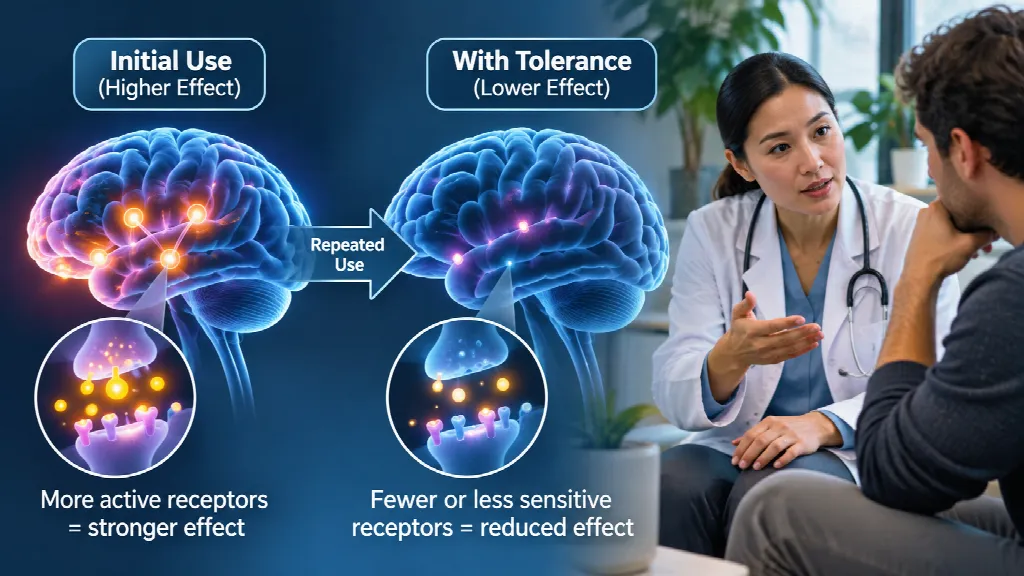
Substance tolerance develops when the brain and body repeatedly adjust to the presence of a drug or alcohol, making subsequent doses less impactful over time. To achieve the initial emotional or physical effect, a person may find themselves needing higher or more frequent amounts. Understanding how tolerance develops and why it matters is a foundational concept in addiction education, as it explains the transition from initial substance use to physiological dependence and increased health risks.
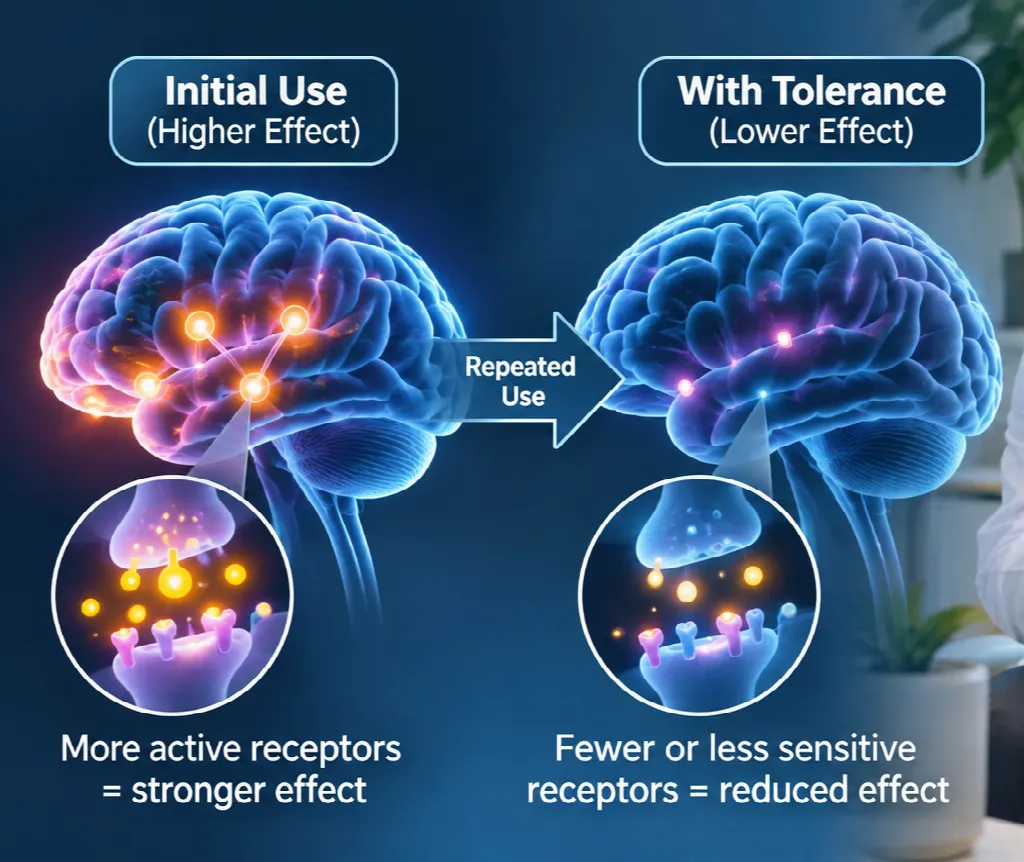
Tolerance is not a moral failing or a sign of weak willpower; it is a biological response. By learning how neuroadaptation alters central nervous system receptors and metabolism, individuals and families can better understand substance use disorders, reduce the risk of accidental overdose, and explore safer paths toward recovery support.
Key Highlights
- Biological Adaptation: Tolerance occurs as the brain alters receptor sensitivity and cellular signaling to maintain internal balance, or homeostasis, in the presence of a substance.
- Multiple Types: Tolerance can develop through metabolic, pharmacodynamic, behavioral, and cross-tolerance mechanisms.
- The Overdose Danger: Tolerance may lead people to consume larger amounts to achieve the same effects. A loss of tolerance after a period of abstinence can increase the risk of accidental overdose if a person returns to a previously tolerated dose.
- Tolerance vs. Dependence vs. Addiction: Tolerance is a reduced response to a substance, physical dependence involves withdrawal when substance use is reduced or stopped, and addiction involves compulsive use despite harmful consequences.
- Recovery and Treatment: Medical care and evidence-based behavioral therapies can support recovery. Tolerance and withdrawal should be managed according to the substance involved and the person's individual needs.
The Biology: How Tolerance Develops in the Brain and Body
Direct Answer: Substance tolerance develops through neuroadaptation, a process in which the brain and body adjust to repeated drug or alcohol exposure. Over time, the central nervous system may become less responsive to a substance, or the body may process and eliminate it more efficiently. As a result, the same amount may produce a different effect than it did previously.
Evidence: Information from the National Institutes of Health (NIH) and NCBI Bookshelf and the National Institute on Drug Abuse (NIDA) describes how repeated exposure to psychoactive substances can cause changes in brain circuits. Depending on the substance, these adaptations may involve changes in receptor sensitivity, cellular signaling, or other processes involved in the body's response.

Why It Matters: Recognizing tolerance as a biological adaptation can reduce judgment and help people understand why changing substance use may be difficult. It also highlights the importance of appropriate medical advice and comprehensive treatment when substance use becomes harmful.
Practical Takeaway: If a prescribed medication or another substance no longer has the effect it once did, do not increase the dosage on your own. Consult a healthcare professional to discuss safe options and possible physiological changes.
Submit Your Listing to Our Rehab Directory
Sober Nation is one of the nation’s leading recovery resources, dedicated to helping people struggling with substance abuse disorder find treatment options that can get them on a path to sobriety.
To get listed in our directory, please fill out the contact form below.
Primary Mechanisms of Tolerance
Scientists describe several mechanisms through which tolerance may develop:
- Pharmacodynamic Tolerance: Occurs when the body's response to a substance changes. Receptors or other cellular processes may become less responsive after repeated exposure.
- Metabolic (Pharmacokinetic) Tolerance: Occurs when the body becomes more efficient at processing and eliminating a substance, potentially reducing how long or strongly it acts.
- Behavioral Tolerance: Refers to learned adjustments that allow a person to compensate for some observable effects of a substance in familiar situations. This does not mean that the substance is no longer impairing the person.
- Cross-Tolerance: Occurs when tolerance to one substance reduces responsiveness to another substance with related effects. The degree of cross-tolerance depends on the substances involved.
Why Understanding Tolerance Matters for Health and Safety
Direct Answer: Understanding tolerance is important because a person may take increasing amounts to achieve a previous effect. Most importantly, tolerance can decrease after a period of reduced use or abstinence. Returning to a previously tolerated dose may then cause an overdose, depending on the substance and circumstances.
Evidence: Guidance from the Substance Abuse and Mental Health Services Administration (SAMHSA) and the Centers for Disease Control and Prevention (CDC) provides information about substance use support and overdose prevention. Loss of opioid tolerance after a period without use is a particularly important safety concern.
Why It Matters: A person may feel less affected by a substance because tolerance has developed, but this does not make higher amounts safe. Tolerance does not eliminate the risk of poisoning, impaired judgment, organ damage, or other harmful effects.
Practical Takeaway: After a period of abstinence or reduced substance use, do not assume that a previously used amount is still safe. For people at risk of opioid overdose, access to naloxone and knowledge of overdose response can be lifesaving. Seek professional guidance about individual risks and recovery support.
Distinguishing Tolerance, Dependence, and Addiction
Medical professionals distinguish tolerance, physical dependence, and substance use disorder because these terms describe different experiences and have different clinical implications.
| Concept | Definition | Key Indicator | Clinical Context |
|---|---|---|---|
| Tolerance | A reduced response to a substance after repeated exposure. | The same amount produces less of an effect than before. | Can occur with certain prescribed medications and other substances; it does not alone establish addiction. |
| Physical Dependence | A state in which the body adapts to a substance. | Withdrawal symptoms may occur when use is reduced or stopped. | Can occur with prescribed medications taken as directed. The safest approach to stopping depends on the substance and the individual's circumstances. |
| Substance Use Disorder | A pattern of substance use associated with clinically significant impairment or distress. | May involve impaired control, cravings, neglected responsibilities, or continued use despite harm. | Requires assessment of symptoms and their impact by a qualified healthcare professional. |
Addressing High Tolerance in Recovery and Treatment
Because repeated substance exposure can lead to physiological adaptations, suddenly stopping certain substances may cause withdrawal symptoms. Withdrawal from alcohol or benzodiazepines can be dangerous and may require medical supervision. Opioid withdrawal can also be distressing and may require clinical support.

Treatment should be tailored to the substance involved, the person's health, and their recovery needs. Care pathways may include:
- Medically Supervised Withdrawal Management: Healthcare professionals assess withdrawal risks and provide appropriate monitoring and treatment. The need for supervision depends on the substance and individual circumstances.
- Evidence-Based Behavioral Therapies: Approaches such as cognitive behavioral therapy (CBT) and motivational interviewing may help people address triggers, thought patterns, and routines associated with substance use.
- Peer Support and Continuing Care: Recovery programs and mutual-aid groups can provide community, encouragement, and ongoing support.
- Medication When Appropriate: Certain substance use disorders can be treated with medications that help reduce cravings, manage withdrawal, or support recovery. Options depend on the substance and the person's clinical needs.
Submit Your Listing to Our Rehab Directory
Want to add your rehab or treatment center to the SoberNation directory? Call (866) 207-7436 to get started.
Frequently Asked Questions
Does high tolerance mean someone has an addiction?
No. Tolerance can develop with some substances, including certain prescription medications taken as directed. Addiction or a substance use disorder involves a broader pattern of symptoms and harmful consequences. Tolerance alone does not establish a diagnosis.
How quickly does tolerance go away after stopping substance use?
The rate at which tolerance changes varies by substance, duration and pattern of use, individual biology, and overall health. There is no single timeline that applies to every person. Because tolerance can decrease during abstinence, returning to a previously used amount may be dangerous.
Can you reset your tolerance without medical help?
Trying to reset tolerance by suddenly reducing or stopping substance use can be unsafe, depending on the substance. Alcohol and benzodiazepine withdrawal can be life-threatening. Consult a healthcare professional before making changes, particularly if you use these substances regularly or have a history of severe withdrawal.
Why do some people build tolerance faster than others?
Tolerance can vary because of differences in genetics, the substance involved, dose and frequency of use, metabolism, other medications, and physical health. The relative importance of these factors differs across substances and individuals.
Is behavioral tolerance real, or is it just acting sober?
Behavioral tolerance describes learned adjustments that can make some effects of a substance less noticeable in familiar situations. However, appearing less impaired does not mean a person's reaction time, judgment, coordination, or physical health are unaffected.
Conclusion
Understanding how tolerance develops and why it matters provides important insight into the biology of substance use and recovery. Tolerance reflects changes in how the brain or body responds to repeated exposure. It can influence substance use patterns and, in some circumstances, increase health and overdose risks.
Tolerance, physical dependence, and addiction are related but distinct concepts. Recognizing these differences can help individuals and families approach substance use concerns with greater understanding, seek appropriate professional care, and explore evidence-based treatment and recovery support.
If you or someone you care about is navigating substance use challenges, speaking with a qualified healthcare professional is an important step toward safer, compassionate care.
Sources
- National Institutes of Health (NIH), NCBI Bookshelf. StatPearls: source reference on drug tolerance.
- National Institute on Drug Abuse (NIDA). Addiction education resources.
- Substance Abuse and Mental Health Services Administration (SAMHSA). National Helpline.
- Centers for Disease Control and Prevention (CDC). Overdose Prevention.
```
About the author
Tim Stoddart
Spiritual gangster. I love dogs, music and the blank page. Grateful to be sober. Join my mailing list for TimStodz and join my Facebook Page.
Ready to take the next step?
Recovery starts with finding the right treatment. Browse rehab centers, detox programs, and sober living homes in our nationwide directory.
Choose your next step
Keep reading, with a purpose
Leave a Reply
Your email address will not be published. Required fields are marked *