
How Addiction Affects Decision-Making and Impulse Control
Learn how addiction affects decision-making and impulse control, why substance use changes brain pathways, and how treatment can support recovery.
By Tim StoddartNov 4, 2026Addiction Treatment
In this article
- Key Highlights
- The Neuroscience Behind Decision-Making and Substance Use
- Key Brain Regions Involved in Choice and Regulation
- Submit Your Listing to Our Rehab Directory
- The Shift From Voluntary Choice to Compulsive Habit
- Evidence-Based Interventions to Support Impulse Control
- Cognitive Behavioral Therapy (CBT)
- Contingency Management (CM)
- Mindfulness-Based Relapse Prevention (MBRP)
- Medication for Specific Substance Use Disorders
- Comparing Cognitive and Behavioral Approaches in Recovery
- Frequently Asked Questions
- Does brain function recover after stopping substance use?
- Why do people with substance use disorders continue using despite serious negative consequences?
- Is poor impulse control a cause or a result of addiction?
- How long does it take for decision-making skills to improve in recovery?
- Can stress impair decision-making during recovery?
- Submit Your Listing to Our Rehab Directory
- Conclusion
- Sources
How Addiction Affects Decision-Making and Impulse Control
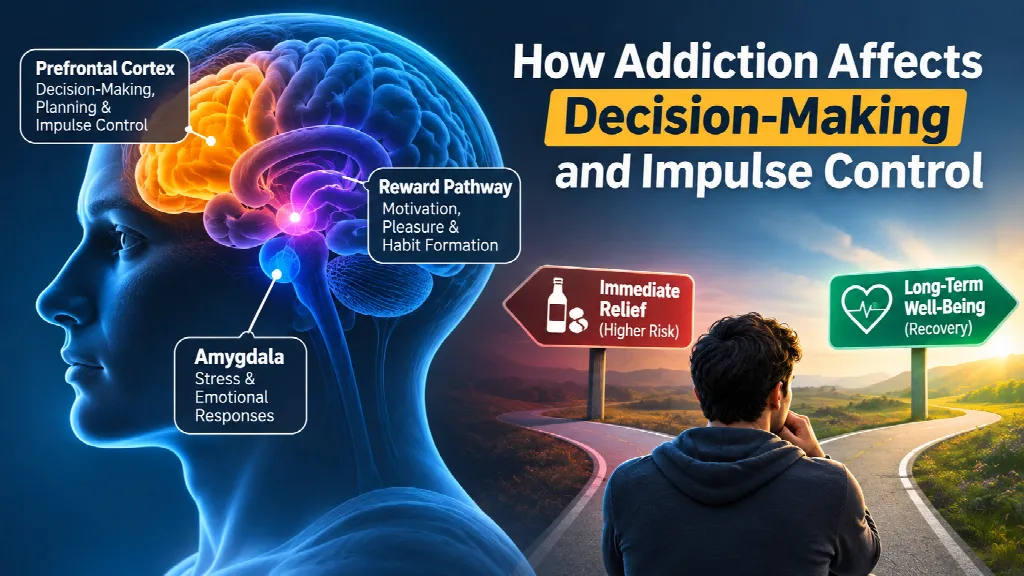
Addiction can affect the brain structures and neural circuits responsible for decision-making, long-term planning, and self-regulation. Repeated substance use can disrupt communication between the prefrontal cortex, which helps with judgment and impulse control, and brain systems involved in reward, motivation, and stress. Understanding how addiction affects decision-making and impulse control helps explain why substance use disorders are complex health conditions rather than personal character failures.
When someone develops a substance use disorder, their ability to weigh long-term consequences against immediate rewards may become impaired. This helps explain why a person may genuinely want to stop using drugs or alcohol but struggle to follow through without appropriate treatment and ongoing support.
Key Highlights
- Prefrontal Cortex: Repeated substance use can affect the brain systems involved in planning, evaluating risks, and controlling impulses.
- Reward Pathways: Changes in the brain's reward system can make substance-related cues and rewards especially motivating.
- Immediate Gratification: Addiction can make immediate relief feel more important than long-term health, relationships, or personal goals.
- Neuroplasticity: The brain can adapt over time. Treatment, supportive routines, and recovery can help people develop healthier patterns of behavior.
- Evidence-Based Treatment: Approaches such as Cognitive Behavioral Therapy (CBT) and contingency management can help people develop coping and self-regulation skills.
The Neuroscience Behind Decision-Making and Substance Use
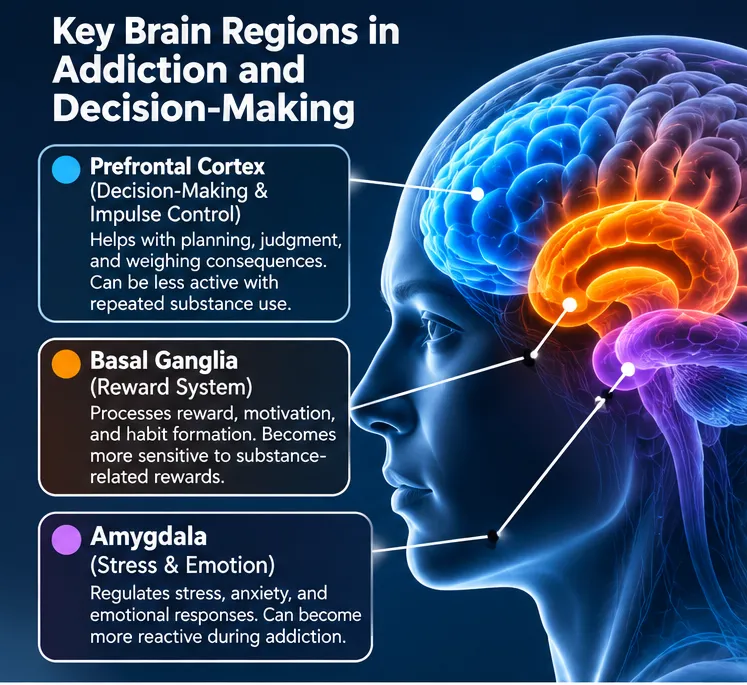
Direct Answer: Addiction affects the balance between brain systems involved in reward, stress, motivation, and executive control. These changes can make it harder to pause, consider consequences, and choose long-term goals over immediate substance-related rewards.
Evidence: The National Institute on Drug Abuse (NIDA) explains that addiction involves changes in brain circuits associated with reward, stress, learning, and self-control. These changes can influence behavior and make stopping substance use difficult.
Why It Matters: Recognizing that addiction can affect decision-making helps families and healthcare professionals respond with understanding and evidence-based care instead of relying on blame or punishment.
Practical Takeaway: During recovery, structured routines and supportive environments can reduce exposure to triggers and make it easier to practice healthier decisions.
Key Brain Regions Involved in Choice and Regulation
Several connected brain regions contribute to decision-making, motivation, emotional responses, and impulse control:
- The Prefrontal Cortex (PFC): Helps with planning, judgment, evaluating consequences, and controlling impulses. Addiction can interfere with the functioning of brain circuits involved in these skills.
- The Basal Ganglia: Plays an important role in reward processing, motivation, and habit formation. Repeated substance use can strengthen learned associations between substances and rewarding experiences.
- The Extended Amygdala: Involved in stress, anxiety, and emotional responses. Changes in stress-related brain circuits can contribute to negative feelings and substance-seeking behavior.
Submit Your Listing to Our Rehab Directory
Sober Nation is one of the nation’s leading recovery resources, dedicated to helping people struggling with substance abuse disorder find treatment options that can get them on a path to sobriety.
To get listed in our directory, please fill out the contact form below.
The Shift From Voluntary Choice to Compulsive Habit
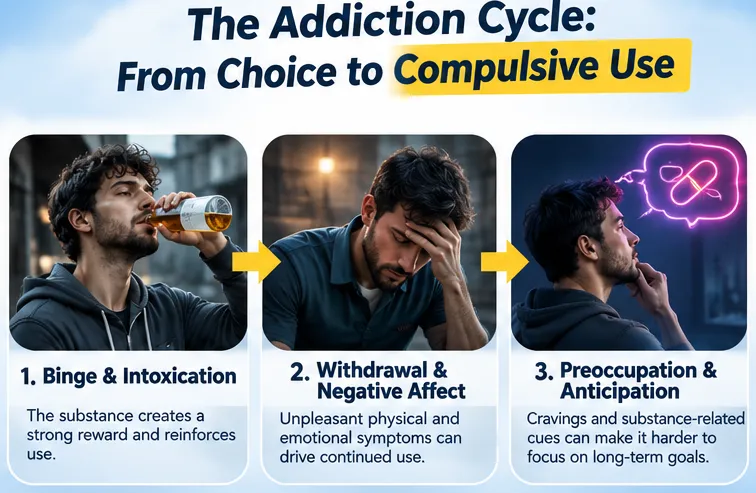
Substance use may begin as a voluntary behavior influenced by curiosity, social situations, or personal circumstances. With repeated use, changes in learning, reward, motivation, and habit-related circuits can contribute to increasingly compulsive patterns of behavior.
Researchers often describe addiction through three interconnected stages:
- Binge and Intoxication: Substance use activates reward-related brain circuits and reinforces behaviors associated with the substance.
- Withdrawal and Negative Affect: When substance effects wear off, some people experience physical discomfort, anxiety, irritability, or other distressing symptoms. These feelings can contribute to continued use as a way to seek relief.
- Preoccupation and Anticipation: Cravings, memories, and environmental cues can increase attention toward obtaining or using the substance. Decision-making and self-control may become more difficult during these moments.
These stages can reinforce one another. Understanding this cycle can help individuals and families recognize why recovery often requires more than a decision to stop.
Evidence-Based Interventions to Support Impulse Control
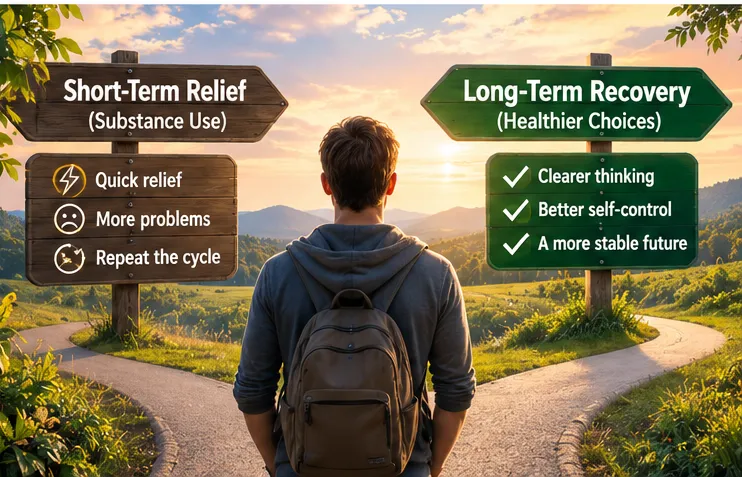
Because addiction can affect brain systems involved in self-regulation, treatment often combines behavioral strategies, appropriate medical care, and ongoing support. The right approach depends on the substance involved, the person's health, and their individual treatment needs.
Cognitive Behavioral Therapy (CBT)
CBT helps individuals recognize unhelpful thought patterns, identify personal triggers, and develop practical coping strategies. People can practice responding differently to cravings, stressful situations, and high-risk circumstances.
Contingency Management (CM)
Contingency management uses structured, tangible incentives to reinforce specific recovery-related behaviors. Depending on the program, rewards may be connected to treatment attendance or verified substance-free test results. This approach has evidence supporting its use in treating certain substance use disorders, including stimulant use disorders.
Mindfulness-Based Relapse Prevention (MBRP)
Mindfulness-based approaches teach individuals to notice cravings, physical sensations, and emotional distress without automatically reacting to them. These skills may help people create space between an urge and their response.
Medication for Specific Substance Use Disorders
Medications can be an important part of treatment for certain substance use disorders. For example, approved medications are available for opioid use disorder and alcohol use disorder. Depending on the medication and individual circumstances, treatment may help reduce cravings, manage withdrawal-related symptoms, or support continued recovery.
Medication decisions should be made with a qualified healthcare professional. Not every medication is appropriate for every person or substance use disorder.
Comparing Cognitive and Behavioral Approaches in Recovery
The following summary highlights how different approaches can support impulse regulation and decision-making during treatment:
| Intervention Type | Primary Focus | How It Helps | Clinical Application |
|---|---|---|---|
| Cognitive Behavioral Therapy | Identifying unhelpful thoughts and high-risk triggers | Develops coping strategies, problem-solving, and alternative responses to cravings | Individual and group therapy in outpatient and residential settings |
| Contingency Management | Reinforcing recovery-related behaviors | Uses structured incentives to encourage treatment participation and other agreed-upon goals | Used in treatment programs for certain substance use disorders |
| Mindfulness-Based Relapse Prevention | Recognizing cravings and emotional distress | Helps individuals practice awareness and respond more deliberately to difficult experiences | May be incorporated into relapse prevention and ongoing recovery support |
Frequently Asked Questions
Does brain function recover after stopping substance use?
The brain can adapt and change through neuroplasticity. Some cognitive and emotional functions may improve during recovery, although the degree and pace of improvement vary. Recovery depends on several factors, including the substance involved, duration of use, overall health, and access to appropriate treatment and support.
Why do people with substance use disorders continue using despite serious negative consequences?
Repeated substance use can affect brain circuits involved in reward, stress, motivation, and self-control. Cravings, withdrawal-related distress, and learned associations can make it difficult to prioritize long-term consequences over immediate relief. This does not mean that recovery is impossible or that treatment cannot help.
Is poor impulse control a cause or a result of addiction?
It can be both. Some people have pre-existing vulnerabilities involving impulsivity, mental health, genetics, or environmental experiences that may increase their risk of developing a substance use disorder. Repeated substance use can also affect brain systems involved in impulse control and decision-making.
How long does it take for decision-making skills to improve in recovery?
There is no single recovery timeline. Some people notice improvements as they progress through treatment, while others may experience ongoing difficulties with attention, memory, or decision-making. The timeline varies depending on the substance, duration and pattern of use, health conditions, and individual recovery circumstances. A healthcare professional can help assess progress and identify additional support needs.
Can stress impair decision-making during recovery?
Yes. Stress can affect attention, emotional regulation, and decision-making. For someone in recovery, stressful situations may also increase cravings or make familiar substance-use patterns more difficult to resist. Learning stress-management and coping skills can be an important part of treatment.
Submit Your Listing to Our Rehab Directory
Want to add your rehab or treatment center to the SoberNation directory? Call (866) 207-7436 to get started.
Conclusion
Understanding how addiction affects decision-making and impulse control offers important perspective for individuals navigating recovery and the families supporting them. Changes in brain systems involved in reward, stress, and self-regulation can make it harder to control impulses and consider long-term consequences. These challenges are not simply moral shortcomings or a lack of willpower.
Evidence-based treatment, supportive environments, and continued care can help people develop healthier coping strategies and make progress toward recovery. With appropriate support, individuals can work toward rebuilding routines, strengthening decision-making skills, and pursuing meaningful long-term goals.
If you or someone you care about is experiencing problems related to substance use, consider speaking with a qualified healthcare professional or addiction treatment provider about available support and treatment options.
Sources
About the author
Tim Stoddart
Spiritual gangster. I love dogs, music and the blank page. Grateful to be sober. Join my mailing list for TimStodz and join my Facebook Page.
Ready to take the next step?
Recovery starts with finding the right treatment. Browse rehab centers, detox programs, and sober living homes in our nationwide directory.
Choose your next step
Keep reading, with a purpose
Related Articles

Treatment Center Uses Navy Seal Tactics To Promote Growth

Why Shame Can Make Addiction Harder to Treat
Vitamin C Your Way To Recovery Bliss

What Is Enabling? Signs You Might Be Making Things Worse

How Addiction Affects Families and How to Heal Together

Why Do People Keep Using Drugs Even When They Want to Stop?
Leave a Reply
Your email address will not be published. Required fields are marked *