
Prestera Center for MH Services Inc
Branchland, WV
- Outpatient
Substance use treatment · Accepts clients on opioid medication but prescribed elsewhere · Cognitive behavioral therapy
Accepts: Cash or self-payment, Medicaid, Medicare


Find a free or private addiction rehab center in West Virginia. Use our search-by-city tool to find recovery near you.
90 centers found (81–90)
Centers must offer every checked Level of Care. Other categories match any checked option within each category.
Branchland, WV
Substance use treatment · Accepts clients on opioid medication but prescribed elsewhere · Cognitive behavioral therapy
Accepts: Cash or self-payment, Medicaid, Medicare
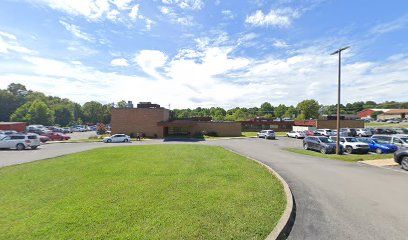
Kingwood, WV
Substance use treatment · Accepts clients on opioid medication but prescribed elsewhere · Cognitive behavioral therapy
Accepts: Cash or self-payment, Medicaid, Medicare

Petersburg, WV
Substance use treatment · Accepts clients on opioid medication but prescribed elsewhere · Dialectical behavior therapy
Accepts: Cash or self-payment, Medicaid, Medicare
Grafton, WV
Substance use treatment · Does not treat opioid addiction · Cognitive behavioral therapy
Accepts: Cash or self-payment, Medicaid, Medicare
New Creek, WV
Substance use treatment · Cognitive behavioral therapy · Substance abuse counseling
Accepts: Cash or self-payment, Medicaid, Medicare
Franklin, WV
Substance use treatment · Accepts clients on opioid medication but prescribed elsewhere · Cognitive behavioral therapy
Accepts: Cash or self-payment, Medicaid, Medicare
Romney, WV
Substance use treatment · Accepts clients on opioid medication but prescribed elsewhere · Cognitive behavioral therapy
Accepts: Cash or self-payment, Medicaid, Medicare
Huntington, WV
Smoking permitted in designated area · State Substance Abuse agency · State mental health department
Bluefield, WV
Smoking permitted in designated area · State Substance Abuse agency · State department of health
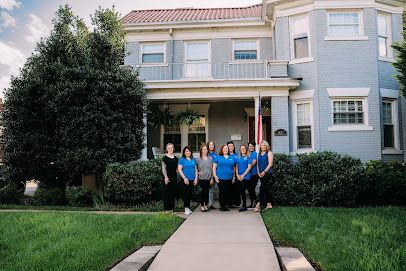
To receive immediate placement help from a treatment representative, call the sponsored hotline — available 24/7.
Sober Nation lists 90 treatment centers across West Virginia, and they cluster in the state's population and hospital hubs. Huntington leads with 10 listed centers, followed by Charleston with 7 and Morgantown with 5. Martinsburg, Clarksburg, and Princeton each list 4; Beckley lists 3; and Fairmont, Elkins, and Wheeling each list 2. That distribution tracks where people live and where hospitals sit, but it also means residents of the state's more rural counties often travel to reach in-person care.
The services those centers offer lean heavily toward ongoing, community-based support rather than acute care. Aftercare is nearly universal at 92%, while 80% run outpatient programs and 80% provide medication-assisted treatment (MAT). Fewer handle the intensive end: 34% offer medically supervised detox, and just 19% offer residential, or inpatient, care. On payment, 90% of listed centers accept Medicaid and 68% accept Medicare, a reflection of how many West Virginians rely on public coverage. For statewide context, federal survey data estimate that about 18% of West Virginians aged 12 or older had a substance use disorder in the past year — roughly 274,000 people — and that around 70% of those who needed treatment did not receive it (SAMHSA, 2022–2023 National Survey on Drug Use and Health). The scale of overdose loss is just as stark: West Virginia recorded 821 drug overdose deaths in 2024, an age-adjusted rate of 48.9 per 100,000 that led the nation, though down sharply from 77.8 in 2023 (CDC). Those external figures put this directory in perspective.
People don't all start treatment in the same place, and West Virginia's mix reflects that. Detox, offered by 34% of listed centers, is medically supervised withdrawal — the safe first step when stopping alcohol or opioids could otherwise be dangerous, though it is a starting point, not a cure on its own. Residential, or inpatient, care is available at 19% of centers and means living on-site for a stretch of structured, around-the-clock treatment; it is the smallest share here, so beds can be limited and may involve a wait. Outpatient programs, offered by 80%, let you live at home while attending scheduled sessions, which fits people holding down work or caring for family. Medication-assisted treatment (MAT), also at 80%, combines FDA-approved medications such as buprenorphine or naltrexone with counseling and is a mainstay for opioid dependence. Aftercare, at 92%, is the long tail — support groups, alumni programs, and relapse-prevention planning that carry on after formal treatment ends. Many people move through several of these levels in sequence rather than choosing only one, so it helps to ask a center how they hand you off from one stage to the next.
Cost is often the biggest barrier, and in West Virginia public insurance carries much of the weight. Among listed centers, 90% accept Medicaid and 68% accept Medicare — unusually high acceptance that reflects how central public coverage is to treatment access across the state. West Virginia expanded Medicaid under the Affordable Care Act, effective January 1, 2014, extending coverage to adults earning up to 138% of the federal poverty level — many of whom previously had no realistic way to pay for rehab. If you have Medicaid, your first move is to confirm which centers are in-network and which services — detox, MAT, residential — your particular plan covers, since plans differ. Private insurance is widely accepted too, and the federal Mental Health Parity and Addiction Equity Act requires many plans to cover substance-use treatment on terms comparable to other medical care. If you are uninsured, do not assume the door is closed: ask centers directly about sliding-scale fees, state-funded treatment slots, and care supported by SAMHSA's Substance Use Prevention, Treatment, and Recovery Services (SUPTRS) Block Grant for residents who cannot pay. The worst thing you can do is rule out treatment on cost before you have actually asked what it will cost you.
If you want a place to start beyond this directory, several West Virginia organizations can point you toward help:
Any one of these is a safe first phone call to make, and you do not need a diagnosis, insurance, or a plan already in place to reach out.
Speak with a treatment representative about programs across West Virginia.
Finding treatment is a personal decision. We help you compare options, explain how advertising works on our site, and give you a way to flag information that needs updating.
Facility listings show contact details so you can ask a center about its services, availability and costs.
Our listing standardsFeatured listings and the sponsored helpline are advertising. A paid placement is not a clinical recommendation.
About advertisingPrograms and availability can change. Confirm licensing, services and insurance coverage directly with a facility before choosing care.
How listings workSee an outdated phone number or a closed facility? Let us know. Facility representatives can also request access to update their listing.
Report a correction