
Alcohol Withdrawal Timeline: What to Expect From the First 24 Hours to Recovery
Learn what to expect during alcohol withdrawal, including common symptoms, the typical timeline, severe complications, and why medically supervised detox may be necessary.
By Tim StoddartSep 21, 2026Addiction Resources
In this article
- Key Highlights
- Understanding Alcohol Withdrawal Syndrome
- Stage by Stage Alcohol Withdrawal Timeline
- Stage 1: Early Symptoms (6 to 12 Hours Post-Last Drink)
- Stage 2: Peak Intensity and Seizure Risk (12 to 48 Hours)
- Stage 3: Delirium Tremens and Peak Complications (48 to 72 Hours)
- Submit Your Listing to Our Rehab Directory
- Stage 4: Subsidence and Physical Stabilization (5 to 7 Days)
- Post-Acute Withdrawal Syndrome (PAWS)
- Overview of Alcohol Withdrawal Stages
- Factors That Influence Withdrawal Severity
- Safe Detoxification Strategies
- Frequently Asked Questions
- Can alcohol withdrawal be fatal?
- When are alcohol withdrawal symptoms the worst?
- Is it safe to detox from alcohol at home?
- What is the "kindling effect" in alcohol withdrawal?
- How does medical detox prevent withdrawal complications?
- How long do sleep problems last after stopping alcohol?
- Conclusion
- Find Support and Treatment Resources
- Submit Your Listing to Our Rehab Directory
- Sources
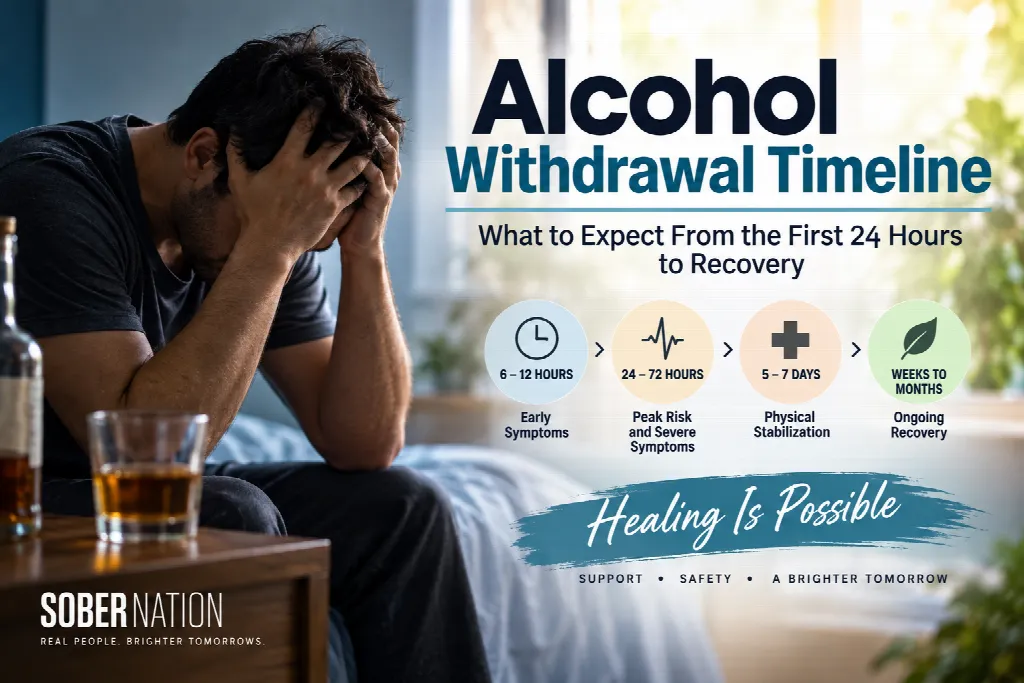
Stopping heavy or long-term alcohol use triggers a predictable sequence of physical and psychological responses known as alcohol withdrawal syndrome (AWS). The physical timeline typically begins within 6 to 12 hours of the last drink, reaches its most critical intensity between 24 and 72 hours, and gradually subsides over 5 to 7 days. However, emotional and cognitive symptoms can persist for weeks or months.
Navigating withdrawal requires clear expectations and proper medical oversight. Because severe symptoms such as seizures or delirium tremens can develop rapidly without warning, understanding the progression of withdrawal helps ensure safety and supports a smoother transition into long-term recovery.
Key Highlights
- Onset (6–12 Hours): Mild symptoms like tremors, anxiety, headache, nausea, and insomnia usually appear first.
- Peak Risk (24–72 Hours): Symptoms reach maximum intensity; potential severe risks include withdrawal seizures and Delirium Tremens (DTs).
- Physical Stabilization (5–7 Days): Acute physical symptoms generally taper off for most individuals under proper care.
- Protracted Symptoms (Weeks to Months): Post-Acute Withdrawal Syndrome (PAWS) may persist, involving sleep disturbances, mood swings, and cravings.
- Medical Supervision is Essential: Sudden cessation from severe alcohol dependence can be life-threatening without professional detox support.
Understanding Alcohol Withdrawal Syndrome
Alcohol acts as a central nervous system depressant. It enhances the inhibitory neurotransmitter gamma-aminobutyric acid (GABA) while suppressing glutamate, an excitatory neurotransmitter. Over time, chronic alcohol consumption causes the brain to adjust its chemistry to maintain balance, downregulating GABA receptors and upregulating glutamate receptors.
When alcohol consumption stops abruptly, the brain is left in a hyper-excitable state. The balance shifts sharply toward excitation, resulting in the characteristic symptoms of withdrawal ranging from mild agitation and elevated heart rate to severe neurological events.
Stage by Stage Alcohol Withdrawal Timeline
While every individual experiences withdrawal differently based on drinking history, overall health, and genetic factors, withdrawal typically follows a distinct multi-stage timeline.
Stage 1: Early Symptoms (6 to 12 Hours Post-Last Drink)
The initial phase of withdrawal usually begins within a few hours after blood alcohol levels begin to drop. Early signs are often mild to moderate and may closely resemble a severe hangover or heightened anxiety state.
Common Stage 1 symptoms include:
- Mild anxiety, nervousness, and restlessness
- Fine tremors in the hands
- Headaches and brain fog
- Nausea, vomiting, or loss of appetite
- Insomnia and sleep disruptions
- Mild sweating and elevated heart rate
Stage 2: Peak Intensity and Seizure Risk (12 to 48 Hours)
As time progresses, neurological hyperexcitability increases. During this phase, autonomic nervous system hyperactivity becomes more pronounced, and the risk of severe complications rises.
Key developments during Stage 2 include:
- Increased Autonomic Instability: Elevated blood pressure, rapid heart rate (tachycardia), and profuse sweating.
- Alcoholic Hallucinosis: Visual, auditory, or tactile hallucinations may occur within 12 to 24 hours. Unlike delirium tremens, people experiencing hallucinosis are usually aware that the hallucinations are not real.
- Withdrawal Seizures: Generalized tonic-clonic seizures typically occur between 12 and 48 hours after stopping alcohol. According to research published by the National Center for Biotechnology Information (NCBI), withdrawal seizures occur in a minority of patients but represent a medical emergency requiring immediate stabilization.
Stage 3: Delirium Tremens and Peak Complications (48 to 72 Hours)
The most severe manifestation of alcohol withdrawal is Delirium Tremens (DTs), which typically emerges between 48 and 72 hours after the last drink, though it can appear up to 7 to 10 days later in some cases.
Delirium Tremens affects approximately 3% to 5% of individuals experiencing alcohol withdrawal. Symptoms of DTs include:
- Severe confusion, global disorientation, and delirium
- Severe agitation and extreme hyperactivity
- Profound visual, auditory, or tactile hallucinations
- Severe autonomic instability (fever, extreme sweating, hypertension, severe tachycardia)
DTs is a life-threatening medical condition with a historic mortality rate of up to 15% if untreated. Modern medical management reduces this risk significantly, underscoring the critical necessity of clinical supervision during detox.
Submit Your Listing to Our Rehab Directory
Sober Nation is one of the nation’s leading recovery resources, dedicated to helping people struggling with substance abuse disorder find treatment options that can get them on a path to sobriety.
To get listed in our directory, please fill out the contact form below.
Stage 4: Subsidence and Physical Stabilization (5 to 7 Days)
For most individuals, acute physical withdrawal symptoms peak by day 3 or 4 and gradually diminish over the remainder of the first week. By day 7, vital signs typically stabilize, and acute physical discomfort subsides significantly.
Post-Acute Withdrawal Syndrome (PAWS)
While acute physical symptoms resolve within a week, the brain requires additional time to recalibrate its neurochemistry. Many individuals experience Post-Acute Withdrawal Syndrome (PAWS), characterized by persistent psychological and neurological symptoms that can last for months.
According to the Substance Abuse and Mental Health Services Administration (SAMHSA), PAWS symptoms frequently fluctuate in intensity and may be triggered by stress or environmental cues. Managing PAWS is a crucial aspect of long-term recovery planning.
Common PAWS symptoms include:
- Persistent sleep disturbances and insomnia
- Mood instability, irritability, and anxiety
- Anhedonia (difficulty experiencing pleasure)
- Cognitive fatigue and difficulty concentrating
- Intense alcohol cravings
Overview of Alcohol Withdrawal Stages
The following table summarizes the typical progression, primary symptoms, and clinical considerations across the alcohol withdrawal spectrum.
| Stage | Timeframe | Primary Symptoms | Severity Level | Care Considerations |
|---|---|---|---|---|
| Stage 1: Early Onset | 6–12 hours | Tremors, mild anxiety, nausea, headache, insomnia | Mild to Moderate | Medical evaluation recommended; hydrate and rest |
| Stage 2: Escalation | 12–48 hours | Increased blood pressure, auditory/visual hallucinations, seizure risk | Moderate to Severe | Clinical monitoring required; seizure precautions |
| Stage 3: Peak Risk (DTs) | 48–72 hours | Delirium, extreme confusion, high fever, severe hallucinations | Medical Emergency | Inpatient medical detox or ICU care required |
| Stage 4: Resolution | 5–7 days | Physical symptoms fade; sleep disruptions may persist | Mild | Transition to ongoing addiction treatment or therapy |
| PAWS | Weeks–Months | Mood swings, anxiety, cravings, cognitive fatigue | Variable | Outpatient therapy, support groups, lifestyle interventions |
Factors That Influence Withdrawal Severity
No two individuals experience withdrawal in the exact same manner. The duration and intensity of withdrawal depend on several compounding medical and behavioral factors:
- Volume and Duration of Use: Higher daily consumption over extended periods significantly increases the severity of physiological dependence.
- History of Prior Detoxification: Repeated episodes of withdrawal can lead to a neurobiological phenomenon known as "kindling," where subsequent withdrawal attempts become progressively more severe and carry a higher risk of seizures.
- Co-Occurring Health Conditions: Underlying liver disease, cardiovascular issues, or co-occurring mental health disorders complicate management and increase risks.
- Polysubstance Use: Combining alcohol with sedatives, benzodiazepines, or illicit drugs alters the withdrawal progression and requires specialized medical management.
- Age and General Health: Older adults and individuals with nutritional deficiencies (such as thiamine deficiency) are at heightened risk for complications like Wernicke-Korsakoff syndrome.
Safe Detoxification Strategies
Due to the unpredictable nature of severe withdrawal, attempting to detox abruptly ("cold turkey") without professional medical oversight can be unsafe. Medically supervised detoxification provides a controlled environment where clinical teams monitor vital signs, manage discomfort, and prevent dangerous complications.
Medical detox typically involves:
- Pharmacological Support: Benzodiazepines are commonly prescribed on a tapering schedule to reduce central nervous system excitability, effectively preventing seizures and DTs. Non-benzodiazepine medications may also be utilized to manage blood pressure or nausea.
- Nutritional Therapy: Administration of intravenous or oral fluids, thiamine (Vitamin B1), folic acid, and multivitamins helps counteract nutritional deficiencies common in chronic alcohol use.
- Continuous Monitoring: Standardized tools, such as the Clinical Institute Withdrawal Assessment for Alcohol (CIWA-Ar), allow nurses and physicians to objectively measure symptom severity and adjust medications in real time.
Detoxification addresses the physical dependency on alcohol, but it is only the initial step in recovery. Transitioning directly from detox into a formal treatment program—whether inpatient rehab, outpatient counseling, or structured recovery support—significantly enhances long-term recovery outcomes.
Frequently Asked Questions
Can alcohol withdrawal be fatal?
Yes, severe alcohol withdrawal can be fatal if untreated. Complications like Delirium Tremens (DTs) and grand mal seizures can lead to hyperthermia, cardiac arrhythmias, or severe injury. Professional medical supervision minimizes these risks through preventive care and immediate intervention.
When are alcohol withdrawal symptoms the worst?
Symptoms generally reach peak intensity between 24 and 72 hours after the last drink. During this period, risks for hallucinations, seizures, and Delirium Tremens are highest.
Is it safe to detox from alcohol at home?
Detoxing at home without medical evaluation is not recommended for individuals with moderate to severe alcohol dependence. Anyone considering withdrawal should first consult a healthcare professional to determine whether outpatient monitoring or inpatient medical detox is necessary.
What is the "kindling effect" in alcohol withdrawal?
Kindling refers to the neurological process where repeated episodes of alcohol withdrawal cause progressively more severe symptoms each time a person stops drinking. This increases the likelihood of experiencing seizures or severe delirium during subsequent attempts.
How does medical detox prevent withdrawal complications?
Medical detox utilizes evidence-based medications, such as benzodiazepines, to stabilize brain chemistry and prevent nervous system hyper-excitability. Clinical staff continually monitor vital signs to address shifts in blood pressure, heart rate, or hydration levels immediately.
How long do sleep problems last after stopping alcohol?
Insomnia and altered sleep architecture are common during acute withdrawal and often persist as part of Post-Acute Withdrawal Syndrome (PAWS) for several weeks or months. Sleep patterns typically normalize gradually as the brain's neurochemistry recovers.
Conclusion
Understanding the alcohol withdrawal timeline helps remove fear and uncertainty from the recovery process. While the first few days present severe physical challenges, acute symptoms generally clear within a week under proper care. Recognizing that full recovery involves healing both the body and mind allows individuals to plan for long-term support beyond detoxification.
If you or someone you care about is considering stopping alcohol use, reach out to a healthcare provider or a professional addiction treatment center to discuss a safe, individualized detox and recovery plan.
Find Support and Treatment Resources
Taking the first step toward recovery is easier with the right information and guidance. Explore SoberNation's comprehensive directory and recovery guides to find accredited medical detox facilities, addiction treatment options, and local support communities near you.
Submit Your Listing to Our Rehab Directory
Want to add your rehab or treatment center to the SoberNation directory? Call (866) 207-7436 to get started.
Sources
- Substance Abuse and Mental Health Services Administration (SAMHSA). Detoxification and Substance Abuse Treatment (TIP 45). SAMHSA
- National Institute on Alcohol Abuse and Alcoholism (NIAAA). Alcohol's Effects on Health and Alcohol Use Disorder. NIAAA
- National Center for Biotechnology Information (NCBI). Alcohol Withdrawal Syndrome Assessment and Management. StatPearls Publishing. NCBI
- Centers for Disease Control and Prevention (CDC). Alcohol and Public Health. CDC
About the author
Tim Stoddart
Spiritual gangster. I love dogs, music and the blank page. Grateful to be sober. Join my mailing list for TimStodz and join my Facebook Page.
Alcohol recovery stories
In their own words, from people in the Sober Nation community.
Before
I drank and used when I didn’t want to. I sunk below my values quicker than I could lower them.
Today
“It took a while to learn how to live one day at a time. It took longer to learn how to deal with my past and my feelings. It had been worth all the work.”
Jay B. · 38 years sober
Read Jay’s storyBefore
My first drink I was 9, my last I was 56. I had a 20 year dry period too. I blacked out from the beginning.
Today
“Today I am peaceful, content and more God conscious than I’ve ever been. I have a home group, a commitment at that group, a sponsor, sponsees and other service positions.”
Sue · 8 years sober
Read Sue’s storyBefore
Awful and just terrible. Sickly and out of my mind. Drinking 7 nights a Week sometimes all day until was blacked out.
Today
“Life is great. I'm focused on being a dad and a husband and staying creative and ways from hobbys that relate to drinking. And I feel better than I have.”
Kevin F. · 13 years sober
Read Kevin’s storyReady to take the next step?
Recovery starts with finding the right treatment. Browse rehab centers, detox programs, and sober living homes in our nationwide directory.
Choose your next step
Keep reading, with a purpose
Leave a Reply
Your email address will not be published. Required fields are marked *