
Addiction vs Bad Habits: What’s the Difference?
Understand the critical differences between addiction and bad habits, including brain changes, loss of control, consequences, and when professional support may be needed.
By Tim StoddartOct 16, 2026Addiction Treatment

In this article
- Key Highlights
- Defining Bad Habits and Addiction
- What Characterizes a Bad Habit?
- Submit Your Listing to Our Rehab Directory
- What Characterizes an Addiction?
- Comparison: Bad Habit vs. Addiction
- The Neuroscience of Habit vs. Addiction
- When Does a Habit Become a Problem?
- Finding the Right Level of Support
- Behavioral Therapy
- Medical Care and Medication
- Peer and Family Support
- Submit Your Listing to Our Rehab Directory
- Frequently Asked Questions
- Can a bad habit turn into an addiction over time?
- Is breaking an addiction just a matter of willpower?
- Can behaviors such as gaming or shopping be considered addictions?
- What are the first signs that a habit has become problematic?
- How can I support a family member who may have an addiction?
- Conclusion
- Sources
Addiction vs Bad Habits: What’s the Difference?
Understanding addiction vs. bad habits comes down to control, behavior, and consequences. A bad habit is a repeated behavior that may be difficult to change but can often be modified through awareness, planning, and consistent effort. Addiction, on the other hand, involves compulsive substance use or other problematic behaviors that continue despite significant negative consequences.
Distinguishing between a habit and a possible addiction matters because the support needed can be different. Treating addiction as simply a lack of discipline can increase shame and prevent people from seeking help. Recognizing warning signs can help individuals and families explore appropriate treatment and recovery resources.

Key Highlights
- Control: Habits can often be changed with deliberate strategies, while addiction may involve persistent difficulty controlling substance use.
- Brain Function: Addiction can affect brain systems involved in reward, motivation, learning, and self-control.
- Consequences: Continuing a behavior despite serious harm is an important warning sign.
- Withdrawal and Tolerance: These can occur with certain substances and may indicate physical dependence, but they do not occur with every addiction.
- Professional Support: A problematic habit may improve with routine changes, while addiction may require evidence-based treatment and ongoing support.
Defining Bad Habits and Addiction
Direct answer: A bad habit is a repeated behavior that a person may want to change. Addiction involves a more persistent pattern of compulsive behavior, difficulty controlling use, and continued engagement despite harmful consequences. Substance use disorders are recognized medical conditions, and professional assessment can help determine whether someone meets the criteria.
According to the National Institute on Drug Abuse (NIDA), addiction involves changes in brain function and behavior. These changes can affect learning, motivation, responses to stress, and the ability to control substance use.
Understanding addiction as a health condition can reduce stigma and encourage people to seek appropriate care. Recovery is not simply a test of willpower, and treatment can help people develop practical strategies for managing cravings, triggers, and other challenges.
Practical takeaway: If you repeatedly struggle to stop a behavior despite serious consequences, or experience distress when trying to stop using a substance, consider speaking with a qualified healthcare professional.
What Characterizes a Bad Habit?
Habits often develop through repetition. A cue or situation prompts a behavior, and the outcome can reinforce the routine. Examples of potentially unhealthy habits include procrastinating, nail-biting, or spending too much time scrolling through social media.
Common characteristics of a habit that someone wants to change include:
- Repeated behavior: The action becomes part of a familiar routine.
- Recognizable triggers: Certain times, places, emotions, or situations prompt the behavior.
- Potential for change: Planning, environmental changes, and consistent practice may help modify the routine.
- Limited impairment: The behavior may be inconvenient or unhealthy without necessarily causing the significant impairment associated with a clinical disorder.
However, habits vary in their severity and impact. A behavior should not automatically be considered harmless simply because it is familiar or repeated.
Submit Your Listing to Our Rehab Directory
Sober Nation is one of the nation’s leading recovery resources, dedicated to helping people struggling with substance abuse disorder find treatment options that can get them on a path to sobriety.
To get listed in our directory, please fill out the contact form below.
What Characterizes an Addiction?
Addiction can involve persistent changes in behavior and brain function that make it difficult to control substance use. The experience varies by substance and individual, but possible warning signs include:
- Difficulty controlling use: Repeated unsuccessful attempts to reduce or stop using a substance.
- Cravings: Strong urges to use that can interfere with daily activities.
- Continued use despite harm: Continuing even when substance use affects health, relationships, work, or other responsibilities.
- Neglected responsibilities: Spending substantial time obtaining, using, or recovering from a substance.
- Tolerance or withdrawal: Developing tolerance or experiencing withdrawal symptoms with certain substances.
These signs do not establish a diagnosis on their own. A qualified healthcare professional can assess the person's symptoms, circumstances, and treatment needs.
Comparison: Bad Habit vs. Addiction
The following table summarizes some general differences. It is intended for education rather than self-diagnosis.
| Feature | Bad Habit | Possible Addiction |
|---|---|---|
| Behavior | A repeated routine that someone wants to change. | A persistent pattern of compulsive substance use or another clinically significant behavior. |
| Control | May improve with planning, practice, and changes to the environment. | Repeated attempts to stop or reduce use may be unsuccessful. |
| Impact on Life | May cause inconvenience or unwanted consequences. | May significantly affect health, relationships, work, or daily functioning. |
| Response to Harm | A person may find it easier to change the behavior after noticing its consequences. | The behavior may continue despite awareness of serious harm. |
| Withdrawal | Changing a routine may cause frustration or discomfort. | Certain substances can cause physical or psychological withdrawal symptoms when use stops or decreases. |
| Support Needed | Self-monitoring, routine changes, or practical strategies may help. | Professional assessment and evidence-based treatment may be needed. |
The Neuroscience of Habit vs. Addiction
Both habits and addiction involve learning and brain processes that reinforce behavior. Dopamine is a neurotransmitter involved in motivation, reward, and learning. It helps the brain recognize experiences and behaviors that may be repeated.
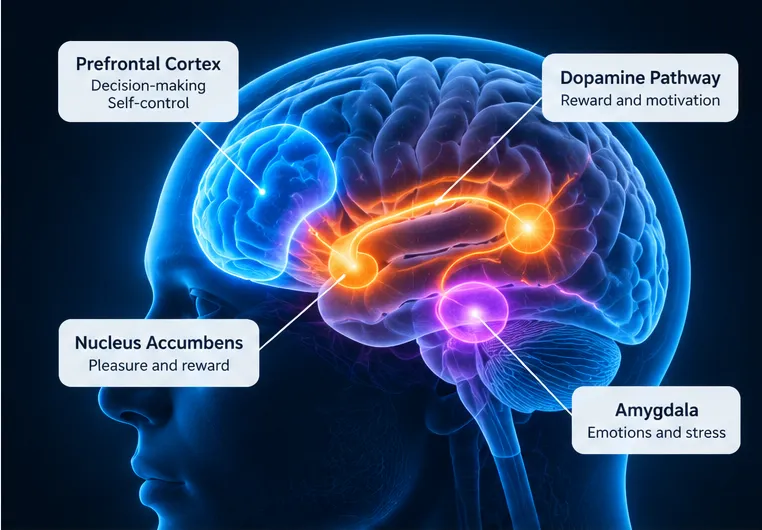
With ordinary habits, repeated cues and actions can strengthen familiar routines. People may be able to change these patterns by identifying triggers, adjusting their environment, and practicing alternative behaviors.
Repeated substance use can affect the brain's reward, stress, memory, and self-control systems. Over time, these changes may contribute to stronger cravings and difficulty controlling use, even when a person wants to stop.
Some people also experience reduced enjoyment of everyday activities or increased distress when they are not using a substance. These experiences vary and are not present in every person with a substance use disorder.
The important distinction is not that people with addiction have no ability to make choices. Rather, addiction can make controlling substance use substantially more difficult and can increase the need for appropriate treatment and support.
When Does a Habit Become a Problem?
Not every repeated behavior is an addiction, and not every unhealthy habit develops into one. Clinicians assess specific symptoms, the duration and severity of the pattern, and its effects on a person's life when evaluating a possible substance use disorder.
Warning signs that a behavior may need professional attention include:
- Time and energy spent: A growing amount of time is spent obtaining, using, or recovering from a substance.
- Neglected responsibilities: The behavior interferes with work, school, family responsibilities, or daily activities.
- Reduced participation: Important social, occupational, or recreational activities are abandoned.
- Risky situations: Substance use continues in situations that may endanger the person or others.
- Unsuccessful attempts to stop: Repeated efforts to reduce or control use do not work as intended.
- Continued use despite harm: The person continues using despite physical, emotional, or relationship problems.
If several of these signs are present, a healthcare professional can help assess the situation. Seeking an assessment does not mean a person has already been diagnosed with an addiction; it is a way to understand what is happening and explore appropriate support.
Finding the Right Level of Support
Changing an unwanted habit may involve tracking triggers, establishing a new routine, setting achievable goals, and seeking encouragement. When substance use becomes difficult to control or causes serious harm, professional care may be necessary.
The Substance Abuse and Mental Health Services Administration (SAMHSA) provides information to help people explore mental health and substance use treatment resources.

Behavioral Therapy
Therapies such as cognitive behavioral therapy (CBT) can help people identify triggers, recognize unhelpful thought patterns, and develop healthier responses to difficult situations. The appropriate approach depends on the person's needs and the behavior being addressed.
Medical Care and Medication
Some substance use disorders can be treated with medications that help manage withdrawal symptoms, reduce cravings, or support recovery. The available options depend on the substance and the person's medical circumstances.
Withdrawal from alcohol or benzodiazepines can be dangerous, so people who use these substances regularly should consult a healthcare professional before stopping. Medical supervision may be necessary.
Peer and Family Support
Supportive relationships can help people feel less isolated while making changes. Peer support groups, family counseling, and recovery communities may provide encouragement, practical guidance, and connection.
Family members can support a loved one by listening without judgment, encouraging professional care, and maintaining healthy boundaries. They do not have to manage another person's recovery alone.
Submit Your Listing to Our Rehab Directory
Want to add your rehab or treatment center to the SoberNation directory? Call (866) 207-7436 to get started.
Frequently Asked Questions
Can a bad habit turn into an addiction over time?
Repeated behavior does not automatically become an addiction. Some patterns of substance use can develop into a substance use disorder, which involves symptoms such as impaired control, cravings, and continued use despite harm. A professional assessment can help determine whether a clinical disorder is present.
Is breaking an addiction just a matter of willpower?
No. Motivation can help, but addiction can involve changes in brain function, cravings, withdrawal, stress, and environmental triggers. Evidence-based treatment and ongoing support can help people address these challenges.
Can behaviors such as gaming or shopping be considered addictions?
Some behaviors can become seriously problematic and interfere with daily life. Gambling disorder is recognized as a behavioral addiction in established diagnostic frameworks. Other behaviors, including gaming and shopping, require careful assessment, and not every excessive behavior meets the criteria for a clinical disorder.
What are the first signs that a habit has become problematic?
Warning signs can include repeated unsuccessful attempts to change the behavior, increasing time spent on it, neglected responsibilities, and continued engagement despite negative consequences. These signs are reasons to consider seeking professional guidance, not proof of a diagnosis.
How can I support a family member who may have an addiction?
Use compassionate, nonjudgmental communication and focus on specific concerns about their health and well-being. Encourage them to speak with a qualified healthcare professional, learn about available support, and maintain boundaries that protect your own well-being.
Conclusion
Understanding the difference between addiction and bad habits can help people respond to difficult behaviors with greater clarity and compassion. Habits may often be changed through practical strategies and consistent effort, while addiction can involve persistent difficulties with control and continued behavior despite significant harm.
Recognizing the warning signs can help people seek the right kind of support. Recovery is possible, and people do not have to navigate substance use concerns alone. If you or someone you care about is struggling, a qualified healthcare professional can help identify appropriate next steps.
Sources
- National Institute on Drug Abuse (NIDA). Drugs, Brains, and Behavior: The Science of Addiction.
- Substance Abuse and Mental Health Services Administration (SAMHSA). Find Help and Treatment Resources.
```
About the author
Tim Stoddart
Spiritual gangster. I love dogs, music and the blank page. Grateful to be sober. Join my mailing list for TimStodz and join my Facebook Page.
Ready to take the next step?
Recovery starts with finding the right treatment. Browse rehab centers, detox programs, and sober living homes in our nationwide directory.
Choose your next step
Keep reading, with a purpose
Leave a Reply
Your email address will not be published. Required fields are marked *