


At a Glance
Primary Focus
Treatment Settings
Treatment Approaches
About Southeast AR Behavioral Healthcare
Southeast AR Behavioral Healthcare in Sheridan, Arkansas provides outpatient substance abuse treatment and dual diagnosis care to residents across Grant, Jefferson, Lincoln, and Arkansas counties. The CARF-accredited recovery center uses Cognitive Behavioral Therapy and accepts Medicaid, Medicare, TRICARE, private insurance, and self-pay, making ongoing outpatient treatment accessible to a broad community.
Southeast AR Behavioral Healthcare is a CARF-accredited substance use treatment center located at 301 North Oak Street in Sheridan, Arkansas. Serving a four-county region that includes Grant, Jefferson, Lincoln, and Arkansas counties, this outpatient recovery center fills a meaningful gap in rural south-central Arkansas, where access to structured addiction treatment has historically been limited. The facility operates Monday through Friday, 8 a.m. to 5 p.m., providing consistent, community-based care close to where clients live and work.
The center's primary level of care is an outpatient program, positioning it as a strong option for individuals who are past the acute phase of their recovery and ready to build sustainable, long-term sobriety within their own communities. Outpatient programming allows clients to maintain work, family, and community obligations while actively engaging in structured substance abuse treatment — a format well-suited to the realities of rural recovery in south-central Arkansas.
Cognitive Behavioral Therapy (CBT) anchors the clinical approach at Southeast AR Behavioral Healthcare. CBT is a well-established therapeutic method that helps individuals identify and shift the thought patterns and behaviors that contribute to substance use. The center also specializes in co-occurring disorders and dual diagnosis treatment, recognizing that mental health conditions and substance use frequently intersect and must be addressed together for lasting recovery to take hold.
Southeast AR Behavioral Healthcare specifically serves individuals who are Deaf or hard of hearing, a population that is frequently underserved by mainstream addiction treatment programs. The center accepts a wide range of payment options — including Medicaid, Medicare, TRICARE, state insurance, private insurance, and self-pay — removing financial barriers that often prevent people from accessing the outpatient treatment they need. For residents of Grant County and the surrounding region seeking a recovery center that combines clinical structure with genuine community accessibility, this facility represents a practical and credentialed choice.
Outpatient Recovery in the Heart of South-Central Arkansas
For residents of Grant, Jefferson, Lincoln, and Arkansas counties, Southeast AR Behavioral Healthcare offers one of the few CARF-accredited outpatient programs in the region. Located on North Oak Street in Sheridan, the center provides structured substance abuse treatment without requiring clients to leave their communities, their families, or their livelihoods behind.
Outpatient programming is often the right fit for people who have moved through an initial phase of recovery and are focused on building the skills, routines, and support systems that sustain sobriety over the long term. By keeping treatment embedded in everyday life, Southeast AR Behavioral Healthcare helps clients apply what they are learning in real time — within the community where their recovery will ultimately need to hold.
Dual Diagnosis Treatment and Cognitive Behavioral Therapy
Southeast AR Behavioral Healthcare treats co-occurring disorders as a central part of its clinical work, not an afterthought. Many people seeking substance abuse treatment are also managing depression, anxiety, trauma, or other mental health conditions, and the center's dual diagnosis approach means both sides of that picture are addressed within the same outpatient program.
Cognitive Behavioral Therapy (CBT) provides the clinical foundation for this work. CBT helps clients examine the connection between thoughts, emotions, and behaviors — giving them practical tools to interrupt patterns that have driven substance use. This structured, skills-based method is particularly well-suited to outpatient recovery, where clients are practicing those tools in their daily lives between sessions.
Accessible Care for an Underserved Community
Southeast AR Behavioral Healthcare extends its outpatient services to individuals who are Deaf or hard of hearing — a group that faces significant barriers to addiction treatment in most settings. This commitment to accessibility reflects the center's broader role as a community recovery resource, not simply a clinical provider.
On the financial side, the center accepts Medicaid, Medicare, TRICARE, state insurance, private insurance, and self-pay, covering a wide range of circumstances that clients in rural Arkansas are likely to bring. The combination of CARF accreditation, inclusive admissions, and flexible payment options makes Southeast AR Behavioral Healthcare one of the more accessible outpatient treatment options available in its region.
Who Southeast AR Behavioral Healthcare Serves
The center's service area spans four Arkansas counties — Grant, Jefferson, Lincoln, and Arkansas — reflecting a regional commitment to making structured outpatient care available beyond any single city or municipality. For individuals in Sheridan and the surrounding communities, this is a local recovery center with credentialed clinical programming and genuine regional reach.
People in longer-term recovery, those managing co-occurring mental health and substance use challenges, and individuals in the Deaf and hard-of-hearing community all find a specific point of access here. The Monday-through-Friday schedule, combined with broad insurance acceptance, keeps the practical barriers to engagement as low as possible for those ready to commit to an outpatient recovery program.
Why Choose Southeast AR Behavioral Healthcare
- CARF-accredited outpatient program serving a four-county rural region in south-central Arkansas
- Specialized dual diagnosis and co-occurring disorder treatment addresses mental health alongside substance use
- Dedicated services for Deaf and hard-of-hearing individuals — a population frequently overlooked by mainstream recovery centers
- Broad insurance acceptance including Medicaid, Medicare, TRICARE, state insurance, private insurance, and self-pay
- CBT-grounded clinical approach within a community-based outpatient format that supports long-term, sustainable recovery
Frequently Asked Questions
What level of care does Southeast AR Behavioral Healthcare offer?
Southeast AR Behavioral Healthcare provides an outpatient program for substance use treatment. This level of care is well-suited for individuals who are building long-term recovery and can engage in structured treatment while continuing to live at home and meet daily responsibilities.
Does Southeast AR Behavioral Healthcare treat co-occurring mental health conditions?
Yes. The center specializes in co-occurring disorders and dual diagnosis treatment, meaning it addresses mental health conditions alongside substance use within the same outpatient program. This integrated approach is an important part of what differentiates the center's clinical work.
What therapy approach does the outpatient program use?
Southeast AR Behavioral Healthcare uses Cognitive Behavioral Therapy (CBT) as part of its outpatient treatment approach. CBT is a structured, skills-based method that helps clients identify thought patterns and behaviors connected to substance use and develop practical strategies for change.
Is Southeast AR Behavioral Healthcare accredited?
Yes. The center holds CARF accreditation, which is a nationally recognized standard for quality in behavioral health and addiction treatment. CARF accreditation indicates the program meets established benchmarks for clinical practice and organizational accountability.
What insurance does Southeast AR Behavioral Healthcare accept?
The center accepts Medicaid, Medicare, TRICARE, state insurance, private insurance, and self-pay. This broad range of payment options helps make outpatient addiction treatment accessible to individuals and families across the four-county service area regardless of their coverage situation.
Does the center serve individuals who are Deaf or hard of hearing?
Yes. Southeast AR Behavioral Healthcare specifically serves individuals who are Deaf or hard of hearing, making it one of the relatively few substance abuse treatment centers in rural Arkansas that explicitly accommodates this population within its outpatient program.
Which counties does Southeast AR Behavioral Healthcare serve?
The center's service area includes Grant County, Jefferson County, Lincoln County, and Arkansas County. Residents across this four-county region in south-central Arkansas can access the center's outpatient substance abuse treatment and dual diagnosis services.
What are Southeast AR Behavioral Healthcare's hours?
The center is open Monday through Friday from 8:00 a.m. to 5:00 p.m. This weekday schedule supports outpatient clients who are balancing treatment with work, family, and other community responsibilities.
Is this center a good fit for someone in ongoing recovery rather than acute detox?
Southeast AR Behavioral Healthcare's outpatient program is structured for ongoing substance abuse treatment and long-term recovery work, particularly for individuals managing co-occurring disorders. The center does not list medical detox among its levels of care, so individuals in acute withdrawal would need to address that need before transitioning into this program.
Nearby Treatment Centers
SE Arkansas Behavioral Healthcare
Pine Bluff, AR
- PHP
- Outpatient
- MAT
Substance use treatment · Accepts clients on opioid medication but prescribed elsewhere · Cognitive behavioral therapy
Accepts: Cash or self-payment, Medicaid, Medicare
Jefferson Comprehensive Counseling Associates
Pine Bluff, AR
- IOP
Substance use treatment · Does not treat opioid addiction · Cognitive behavioral therapy
Accepts: Cash or self-payment, State-financed health insurance plan other than Medicaid, Sliding fee scale
10th District Substance Abuse Program DBA New Beginnings CASA
Pine Bluff, AR
- IOP
- MAT
Substance use treatment · Accepts clients on opioid medication but prescribed elsewhere · Cognitive behavioral therapy
Accepts: Cash or self-payment, Sliding fee scale
United Family Services Inc
Pine Bluff, AR
- Outpatient
Substance use treatment · Does not treat opioid addiction · Cognitive behavioral therapy
Accepts: Payment assistance
Central Arkansas Treatment Services
Bryant, AR
- Outpatient
- MAT
Substance use treatment · All Clients in Opioid Treatment Program · SAMHSA-certified Opioid Treatment Program
Accepts: Cash or self-payment
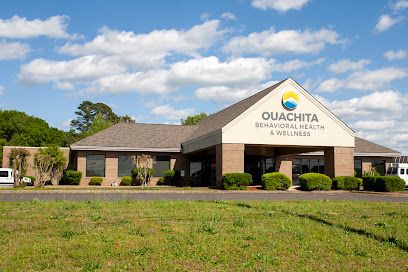
Ouachita Regional Counseling and MHC
Malvern, AR
- PHP
- Outpatient
Substance use treatment · Does not treat opioid addiction · Cognitive behavioral therapy
Accepts: Cash or self-payment, Medicaid, Medicare