

Depression in Recovery
By Tim StoddartOct 8, 2013Updated Jul 22, 2014Mental Health
As the co-owner and co-founder of this site, I have made it a priority of mine to stay unbiased in the content that we write, and share among the Sober Nation family. With that being said, every once in a while I like to take it upon myself to share my own experience, especially how it pertains to my recovery.
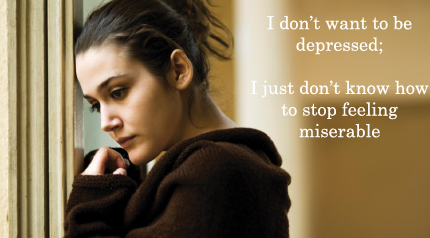
Many recovered addicts can relate to feeling depressed. We are told that if we get sober, we will feel better. For me, in the beginning, that was the only thing keeping me from picking up. I felt beaten down and worthless. Self worth can not be replaced, it can only be renewed. That is so easy to say, but when we are in the pits of our own insecurities, it seems unfathomable to ever get back to the time when we "felt good" about life.
Unfortunately, getting sober does not mean feeling better. It just means we get sober. Naturally, removing harmful and depressing chemicals from your body plays a physiological role in how we feel. But there is more to it then that, there is the element of self worth and self esteem that can only be attained through action.
This idea is incredibly disheartening when we find ourselves dealing with depression in recovery. With almost four years of continuous sobriety, I have been struggling with depression. There is no rhyme or reason to it, it just came. It creeps in like a dense fog, and penetrates my skin. The worst part about it, is that it is impossible to put on a finger on why I am feeling this way. I just... feel shitty. For no apparent reason at all. For me, the most frustrating part is when people tell you "you need to take it upon yourself to feel better." Oh really?? I haven't thought of that before. I'll just... feel better. Got it! Thanks for the advice. Unfortunately, those people are right. No one else is going to make me feel better. I have to take it upon myself. I have to act my way into feeling better. My feelings are a direct result of my actions, so when I am feeling down, I have to look at what I am doing. That is the best place to start.
Now... I am strong, and over the past few days I have been doing some things that have been helping with it. Exercise has always been a big part of it, there is something very soothing to me about exhausting myself and putting myself through pain. So I know the future looks bright. When looking back on the past few weeks, and looking at how I have been acting, there are moments that I would love to take back. Insecurity really comes through in others. I think (speaking for myself) that my insecurities come out most when dealing and interacting with other people, especially those that mean the most to me. It would be so much easier to just speak about how I feel, and being upfront with people. However, my first reaction is usually regarding telling someone else what they are doing wrong. That is silly, but it is somehow easy to internally justify. After the fact, I almost always see that I was wrong, and that I acted like a jackass.
The only thing I can do now is learn from it, and do my best to act better the next time something like this comes around. Feeling depressed is such a complex riddle to solve. It is a conundrum because when we are depressed, we dont want to to anything, which makes us more depressed, ad infinituum. The sad truth is that they only time I find myself ready to change, is when I have felt enough pain. Eventually, the stove gets too hot, and I make a change. This is still a reactive response, and it is the best interest of myself (and the people around me) to be more proactive about my own feelings and my adequacy in the world. I know I matter, I know I am loved, but sometimes knowing it and feeling it are two different things.
Depression in recovery sucks. I have heard people say it sucks worse than depression in active addiction because my coping mechanisms don't involve numbing myself from the pain. I am forced to deal with it. I am forced to take a look at myself. That is not fun. Not for me, not for anyone.
I have some amends to make, although this does not count as a formal amends, I would still like to let the world know that I am sorry for how I have acted recently. I have dealt with stress in unhealthy ways. I am not perfect, but I am actively trying to get better a day at a time.
Here's the kicker. I am so lucky and blessed for my life. The best thing about this website is that we have provided a medium for people to help each other, and to encourage each other. So if for no other reason, I hope that someone reads this and finds a way to relate. It is comforting to know that I am not the only one who struggles with anxiety and depression. If you are also struggling, we are here to help. We are all as strong and the foundation we build around us. So hopefully, the foundation that we have built is enough to make those around us stronger. Collectively, we can make the world a better place.
If you need to talk call us at (866) 207-7436.
Thank You... for giving me purpose. For giving me strength, and for giving me a reason to get out of bed when sometimes, I just don't want to.
About the author
Tim Stoddart
Spiritual gangster. I love dogs, music and the blank page. Grateful to be sober. Join my mailing list for TimStodz and join my Facebook Page.
Ready to take the next step?
Recovery starts with finding the right treatment. Browse rehab centers, detox programs, and sober living homes in our nationwide directory.
Choose your next step
Keep reading, with a purpose
Related guide
What is Sobriety? Understanding Your Path to True Freedom
Explore what sobriety truly means in this enlightening article, delving into its journey beyond physical abstinence to emotional and psychological freedom. Discover how therapies like CBT, DBT, and MAT, along with a holistic approach, are key to overcoming addiction. Learn about sobriety's positive impacts on relationships, mental health, and overall well-being, highlighting the profound sense of freedom and fulfillment it brings.
Related guide
Getting Sober: How to Start Safely and What to Do Today
If you want to get sober but do not know where to begin, start with the immediate questions: how to stop safely, who to ask for help, and what support you will need in the first few days.
Related guide
Staying Sober: A Practical Guide to Protecting Your Recovery
Once you stop drinking or using, there is still work, family, stress, and free time to figure out. Staying sober involves building routines and knowing who to call when you want to use again.
Leave a Reply
Your email address will not be published. Required fields are marked *